
The lard of Faeto: a heritage that tastes of memory and mountains
Tempo di lettura:
In Faeto, a village perched in the Alta Valle del Celone, on the heights of the Monti Dauni (Dauni Mountains) in the province of Foggia, there are flavors you won’t…
In Faeto, a village perched in the Alta Valle del Celone, on the heights of the Monti Dauni (Dauni Mountains) in the province of Foggia, there are flavors you won’t find anywhere else. The lard of Faeto is one of these: a product recognized in 2005 among the Traditional Agri-food Products (PAT) of the Ministry of Agricultural Policies, but one that exists in the collective memory of the village long before any official classification.
Here, lard has never been just an ingredient. It has been a symbolic currency of wealth, a measure of family well-being, and the protagonist of proverbs handed down in the Francoprovençal dialect. We are speaking of a gastronomic identity rooted in an extraordinary medieval history that still shapes the way the community of Faeto tells its own story today.
A village on the edge of the known world and a people from afar
Faeto is not like other towns. With its altitude of over 800 meters, long snowy winters, and forests descending toward the Celone and Vulgano valleys, it has a soul that is more reminiscent of southern France than of sunny, seaside Puglia (Apulia).
This is no coincidence. Between the late 13th and early 15th centuries, populations of Francoprovençal culture settled in this part of the Monti Dauni Apennines, bringing with them language, customs, and food traditions that survive to this day. Faeto is one of the very few towns in Italy where a variant of Francoprovençal is still spoken, albeit by a small number of elderly residents, a Romance language distinct from French, Occitan, and Italian.
In this exceptional historical and cultural context, the pig held a central place in the domestic economy and collective imagination.
The black pig, lard, and Francoprovençal rural culture
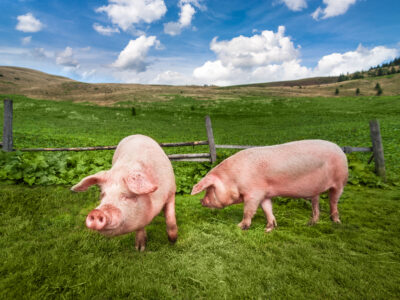
In Faeto tradition, the breeding of the black pig of the Monti Dauni, a native breed raised semi-wild, grazing in oak and beech forests, has always provided farming families with what they needed to survive the winter. Lard, obtained from the fatty layer along the pig’s back, was carefully processed and preserved as a precious reserve.
Proverbs in the Francoprovençal dialect still circulating in Faeto and Celle di San Vito describe this reality with precision and irony:
- “Se te tinne lu ppanne e lu rèj, so vint a juccà te nmporte ppà”: “If you have bread and lard, when the snow comes you don’t care”: an image of rural self-sufficiency in the face of the harsh Daunian mountain winters.
- “Lu cajunne minne ja ffèj catte ddàj de rèj”: “My pig has produced four fingers of lard”: the thicker the layer of lard, the greater a family’s wealth.
- “Lo larduozz i sunt bunn pe demmann; avì agnate la rasce de ccèj”: “Keep the pieces of lard for tomorrow; today there is plenty of meat”: lard as a reserve, to be kept for difficult days.
Three sayings, three snapshots of a rural civilization in which waste was unthinkable and every part of the pig had its purpose.
Nicknames, cracklings, and “pizza unta”: the pig as living culture
The bond between Faeto and the pig is not only gastronomic. It is part of identity. Even today, dialect nicknames linked to the world of swine circulate in the village: “Piezze de rèj” (piece of lard), “Sausicchj” (sausage), “Panunte” (bread fried in lard), “Presutte” (prosciutto), “Giacchette de Puòrch” (pig’s jacket). A popular vocabulary that shows how deeply rooted this culture once was and still is in daily life.
Traditional recipes: what to eat in Faeto
Among the typical products of Faeto and the recipes that best represent this tradition, two stand out and are well worth seeking out:
“Pizze do le ciccule”: pizza with pork cracklings: cracklings are obtained by rendering lard, then incorporated directly into the bread dough. The result is a rustic, flavorful pizza, dense with rural memory that needs no grand name to be remembered.
“Pizze uente” (oily pizza): made with lard, flour, water, Faeto’s famous potatoes, and “lu luann”, the natural yeast. A recipe that speaks of its territory through every ingredient.
These preparations are part of the local gastronomy of the Monti Dauni, which knows no compromise with standardization: each family preserves orally transmitted variations, each oven has its own memory.
The cured meats of Faeto and the Alta Valle del Celone: a tradition to be experienced
The lard of Faeto cannot be fully understood without visiting the village, walking through its stone alleys, and stopping in the small shops and workshops where the black pig is still processed using centuries-old methods.
The cured meats of the Monti Dauni, including lard, prosciutto, and Faeto sausage, represent one of the high points of the gastronomy of Apulian villages, often unknown to mass tourism but greatly appreciated by those who choose slow tourism and the exploration of inland areas of the Daunian Apennines.
If you want to take home the taste of this territory, ask local producers or visit the village during the summer season, when events and festivals enliven the village squares.
Discover the other places and traditions of Faeto and the Alta Valle del Celone
Lard is only one of the traces Faeto has left in the gastronomic and cultural history of Puglia. This village hides much more: a still-living medieval language, a landscape of forests and ridges that invites exploration, and a history tied to the Angevin conquest and Francoprovençal migrations.
Continue discovering Faeto and the Alta Valle del Celone.
AT GLANCE
Where
Faeto
Type
Suitable for
All
Interests
SHARE


PODCAST
L’Alta Valle del Celone
Ten episodes exploring Celle di San Vito, Faeto and Castelluccio Valmaggiore through the voices of those who live in these places every day.
An audio journey through stories, memories, traditions, landscapes and flavours, told by the people of the three towns. The podcast guides visitors in discovering the authentic soul of the Alta Valle del Celone: a land of forests, villages and vibrant communities, where every voice preserves a piece of its identity.
Recommended experiences
The Highest Municipality in Puglia
The geography of the inland Foggia area holds remarkable …

Fresh Pasta Festival in Castelluccio Valmaggiore
Summer in the small villages of the Puglian (Apulian) Apennines …
Fresh Pasta in Celle di San Vito
There is an inseparable bond between the table of a small …
Keep exploring
The Highest Municipality in Puglia
The geography of the inland Foggia area holds remarkable …
Fresh Pasta Festival in Castelluccio Valmaggiore
Summer in the small villages of the Puglian (Apulian) Apennines …
Fresh Pasta in Celle di San Vito
There is an inseparable bond between the table of a small …
Ppìzze do le ccìcule: The Ciccioli Pizza of the Franco-Provençal Communities
There is a dough that carries the flavor of January. Of …