Church of Santa Maria delle Grazie
Reading time:
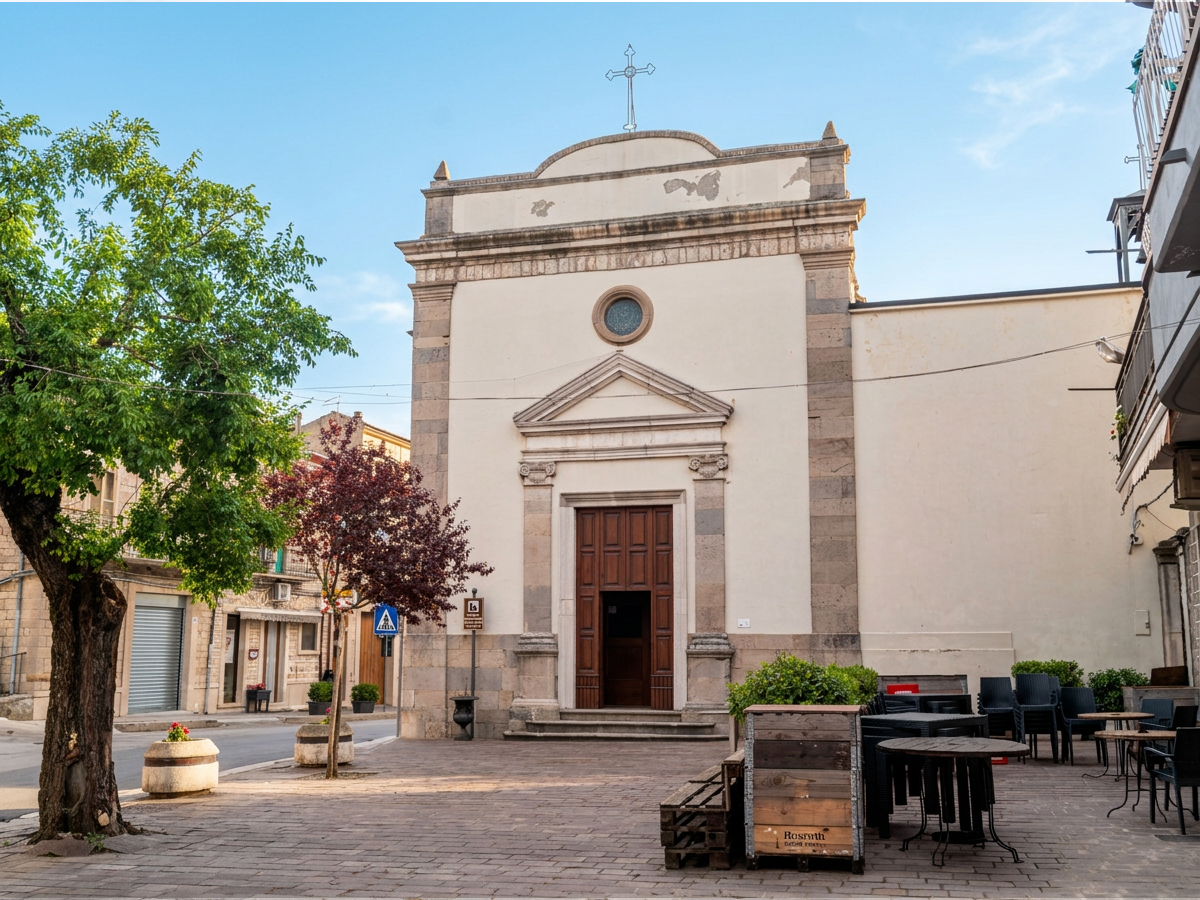
Church of Santa Maria delle Grazie in Castelluccio Valmaggiore. On the main street of Castelluccio Valmaggiore stands the Church of Santa Maria delle Grazie: a building that holds almost a…
Church of Santa Maria delle Grazie in Castelluccio Valmaggiore.
On the main street of Castelluccio Valmaggiore stands the Church of Santa Maria delle Grazie: a building that holds almost a thousand years of religious history, architectural layers and popular devotion. Reopened for worship after many years of closure, the church is today one of the landmarks of the religious architecture of the Monti Dauni and a must for anyone who wants to truly understand the deep identity of this village in the Alta Valle del Celone.
A village where time is measured in centuries
Those who come to Castelluccio Valmaggiore for the first time often follow their curiosity: the kind that leads towards the authentic villages of inland Puglia, far from the beaten track and able to give a sense of place that is hard to find elsewhere. The village greets you with narrow lanes, stone buildings, 19th-century fountains and a calm that is not abandonment but a slow rhythm of walks, glances and pauses.
In this setting, the church dedicated to Santa Maria delle Grazie is not an isolated monument. It is part of a living fabric, a presence in the heart of the village that has accompanied the community for generations.
A façade, an inscription and a story that begins in 1114
The façade of the church is striking for its classical restraint. At its centre opens a fine stone doorway with a pediment, on whose architrave stands the inscription “in me ogni grazia” (“in me every grace”), a phrase that sums up centuries of Marian devotion and welcomes visitors even before they cross the threshold.
The church was once dedicated to the Madonna della Cintura (Our Lady of the Cincture), a cult of Augustinian origin deeply rooted in central and southern Italy. This detail is not a minor one: it recalls a specific devotional tradition linked to the Order of Discalced Augustinians, whose friary has left traces right next to the church, now incorporated into the nursery school building that stands on the convent’s foundations.
The most surprising element, however, came to light during the 1880 restoration: a stone inscription bearing the date MCXIV – 1114. This suggests that a religious building already existed on this site at the beginning of the 12th century, placing the church firmly among the oldest examples of medieval religious architecture in the Monti Dauni.
The interior: the nave, the apse and the wooden group from Ortisei
Inside, the space is intimate and coherent. The church has a single nave ending in a semicircular apse, an architectural choice that gives the space an almost meditative circularity. At the centre of the apse is the polychrome altar, which frames the most valuable artwork in the building: the wooden group depicting the Child Mary among angels, made by the renowned Stuflesser workshop of Ortisei, in Val Gardena.
The Stuflesser name is familiar to anyone who knows South Tyrolean woodcarving: it is a workshop with a long tradition of sacred sculpture, whose works can be found in churches all over Italy. Finding one in a village of the Alta Valle del Celone tells us something precise: the care with which village communities, even those far from the big centres, have always sought beauty for their places of worship.
A stop in the heart of Puglia’s inland areas
The inland areas of Puglia, long seen as marginal, are today at the centre of new stories and of a growing number of thoughtful visitors. Castelluccio Valmaggiore is part of an area touched by the routes of the Via Francigena del Sud, together with the neighbouring villages of Faeto and Celle di San Vito, and is an ideal destination for an off-season weekend discovering an authentic territory.
Visiting the Church of Santa Maria delle Grazie means becoming part of this journey: not just seeing a building, but reading the signs of a community that has preserved its material and spiritual memory through the centuries.
Discover more places in Castelluccio Valmaggiore and the Alta Valle del Celone
The church is only one of the ways into the history of this village. Castelluccio Valmaggiore cannot be seen in a single visit: the Byzantine tower, the old arches, the Church of San Giovanni, the landscapes of the Alta Valle del Celone, the food traditions and the calendar of local events make up a wider story that is worth exploring in full.
Keep browsing the places, traditions and itineraries of Castelluccio Valmaggiore and the Alta Valle del Celone.
AT A GLANCE
Where
Suitable for
Everyone
SHARE
SHARE


PODCAST
L’Alta Valle del Celone
Ten episodes exploring Celle di San Vito, Faeto and Castelluccio Valmaggiore through the voices of those who live in these places every day.
An audio journey through stories, memories, traditions, landscapes and flavours, told by the people of the three towns. The podcast guides visitors in discovering the authentic soul of the Alta Valle del Celone: a land of forests, villages and vibrant communities, where every voice preserves a piece of its identity.
Recommended experiences

Alta Valle del Celone: a training day on communicating the destination
A meeting in Castelluccio Valmaggiore on the future of tourism …
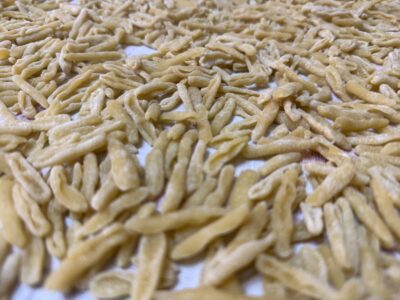
Handmade Pasta Festival
Handmade Pasta Festival in Castelluccio Valmaggiore. Summer in …

Village-style bread balls
Bread balls in Castelluccio Valmaggiore. The ingenuity of …
Keep exploring

Church of San Vito, Celle di San Vito
The mountain landscape of the Daunian Apennines is dotted with …
24 and 25 June – San Giovanni Battista, patron saint of the village
The feast of San Giovanni Battista in Castelluccio Valmaggiore …