

The Taverna di San Vito
Reading time:
The Taverna di San Vito, a crossroads of pilgrims and travellers between Faeto and Celle di San Vito Among the woods and hills of the Alta Valle del Celone, in…
The Taverna di San Vito, a crossroads of pilgrims and travellers between Faeto and Celle di San Vito
Among the woods and hills of the Alta Valle del Celone, in an area that for centuries was a natural crossing point through the Monti Dauni, lie the remains of the Taverna di San Vito, one of the most significant places for understanding the medieval history of the territory. The Taverna di San Vito, in the countryside of Faeto, was an important resting place on the ancient routes linking Campania and Puglia. It was part of a rural settlement that included the casale (farmstead), a building for welcoming travellers and the nearby little church dedicated to San Vito. Its position on the line of the ancient Via Traiana, later also followed by pilgrims on the Via Francigena del Sud, made it a landmark for anyone crossing this part of the Monti Dauni.
Even today this place tells of a past made of journeys, encounters and cultural exchange. Visiting this area means immersing yourself in a lesser-known part of Puglia, where the landscape keeps the slow rhythm of ancient roads travelled on foot and where every stone holds a memory that still speaks to the present.
A border place between Faeto and Celle di San Vito
The Taverna di San Vito lies in an area historically shared between the territories of Faeto and Celle di San Vito, two small villages that still keep an identity deeply bound to the history of the Daunian Apennines.
This border position helped make the site a landmark for both communities.
One peculiarity of the place concerns the little Church of San Vito which, although it stands within the municipality of Faeto, is historically linked to the community of Celle di San Vito. The church is documented as early as the beginning of the 12th century, and over time its care passed from the monks of the Monastery of San Nicola to the clergy of Castelluccio Valmaggiore, and later to the jurisdiction of Celle di San Vito. A story that shows the historical ties between the different communities of the Alta Valle del Celone, beyond today’s administrative boundaries.
Here religious routes, trade routes and local events that accompanied the birth and growth of the two villages are intertwined. Not far away stood the casale of San Vito and the Castiglione, also known as the Castle of Crepacore, a medieval fortification that controlled access to the valley and kept travellers safe.
The fascination of this area comes precisely from this overlapping of stories, where administrative boundaries give way to a shared cultural heritage.
A rural complex serving the ancient routes
The location of the Taverna di San Vito is closely tied to the ancient Via Traiana, the Roman road that linked Benevento to Brindisi across Daunia. In this part of the Monti Dauni, the road reached one of the highest points of its route before descending towards ancient Aecae, today’s Troia.
Over the centuries these routes continued to be used by merchants, travellers and pilgrims. The Taverna offered hospitality along the network of itineraries that we now recognise in the history of the Via Francigena del Sud. Being able to stop, find shelter and get water was particularly important when crossing the Apennine hills.
The casale, the nearby little church and the spring show the role this place played in the history of the roads and rural settlements of the Alta Valle del Celone.
From Roman staging post to medieval inn
The history of the site may go back to Roman times. Some scholars identify the area of the Taverna di San Vito with the Mutatio Aquilonis, a staging post on the Via Traiana where travellers could stop and change horses. It is a plausible historical identification, but not definitively proven.
One of the most important pieces of evidence is an inscription from 213 AD, dedicated to Emperor Caracalla by the legionary Marcus Aurelius Nigrinus. The inscription mentions the lucus Aquilonensis, a sacred grove that must have been in this area. The inscription confirms the importance of the place in Roman times, though on its own it does not prove that the staging post stood exactly here.
Between the Taverna, now known as the Masseria dei Conti Maresca, and the old little church is a spring that feeds the Celone stream, once also called Aquilone. The presence of water helped make this place a reference point for travellers, pilgrims and local communities.
In the Middle Ages the Taverna continued to offer hospitality along the routes linking the hinterland with the sanctuaries and ports of Puglia. Of the old complex there remain the casale, which keeps a 16th-century appearance, and the little Church of San Vito, restored after a long period of neglect. Sadly the church has lost some of its original architectural features, including the fine stone rose window that once adorned its façade, stolen by persons unknown.
Between the Sanctuary of San Vito and the memory of the territory
Over the centuries the cult of San Vito has been one of the most significant elements of local religious life. The little country church, today often called the Sanctuary of San Vito, bears witness to the strong bond between spirituality, landscape and the communities that have lived in these mountains.
The area of the tavern and that of the church form a single historical story of pilgrimage, hospitality and popular devotion. Walking among these places you can still sense the role they played for those crossing the valley centuries ago, when every resting place was a precious resource along the way.
In the meadows around the little church the San Vito Fair was once held, an important event for the communities of the Alta Valle del Celone and the surrounding areas. It included the trading of livestock, farm tools and produce, drawing farmers, breeders and merchants from the Tavoliere and from the Campanian side of the Apennines. The fair was a moment of meeting and exchange, confirming the central role of this place not only in religious life but also in the rural economy of the territory.
The Taverna di San Vito remains an important testimony to the history of travel and hospitality in the Alta Valle del Celone. The rural complex, currently closed for restoration, cannot be freely visited. Before going, it is advisable to check access conditions, including for the nearby little church.
How to get there and what to see nearby
The Taverna di San Vito lies in the countryside of Faeto, near the San Vito pass, not far from the border with Campania and the territory of Celle di San Vito. It can be reached by local roads, but before visiting it is advisable to check road conditions and any restrictions on access to the complex.
The Via Francigena del Sud passes near the Taverna, following the ancient route that enters Puglia from Campania and continues towards Monte Buccolo and Troia. The Sentiero Frassati of Puglia is a separate route, linking the villages of Faeto and Celle di San Vito and leading to other natural and historical settings of the Alta Valle del Celone.
A journey into the heart of the Alta Valle del Celone
The Taverna di San Vito is not only a witness to the past but a gateway to the most authentic identity of the Alta Valle del Celone. With its trails, ancient places of worship, medieval remains and small villages, this territory invites you to slow down and discover a history built over the centuries from the meeting of people, nature and pilgrim routes.
As you continue your journey you can learn more about the history of the villages, explore other places of interest and discover the traditions, events, culture, food and wine and itineraries that make Faeto, Celle di San Vito and Castelluccio Valmaggiore destinations to enjoy at a slow pace and with a curious eye.
AT A GLANCE
Where
Suitable for
Everyone
SHARE


PODCAST
L’Alta Valle del Celone
Ten episodes exploring Celle di San Vito, Faeto and Castelluccio Valmaggiore through the voices of those who live in these places every day.
An audio journey through stories, memories, traditions, landscapes and flavours, told by the people of the three towns. The podcast guides visitors in discovering the authentic soul of the Alta Valle del Celone: a land of forests, villages and vibrant communities, where every voice preserves a piece of its identity.
Recommended experiences
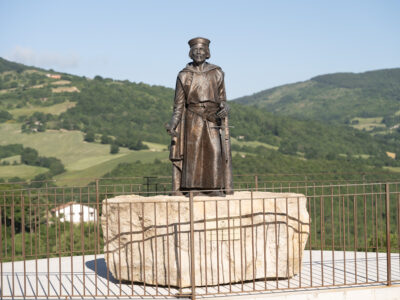
The statue of Charles I of Anjou in Celle di San Vito
The statue of Charles I of Anjou in Celle di San Vito. On the …
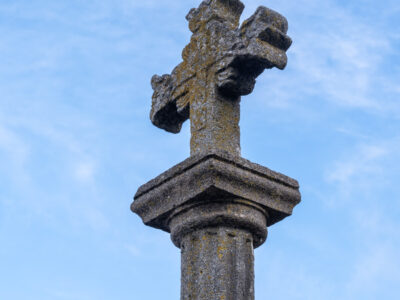
The Cross of the Provençals in Celle di San Vito
The Cross of the Provençals in Celle di San Vito Among the …
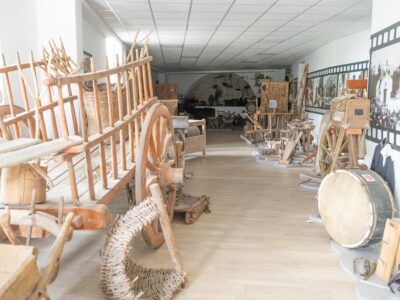
“Vincenzo Rubino” Museum of Franco-Provençal Rural Life
“Vincenzo Rubino” Museum of Franco-Provençal Rural Life …
Keep exploring
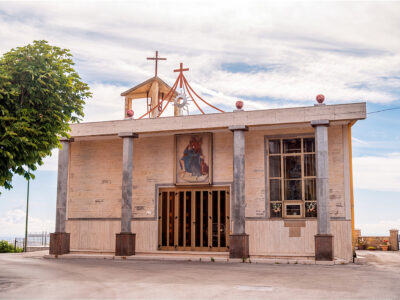
Church of San Rocco
In the heart of the Alta Valle del Celone, in Castelluccio …
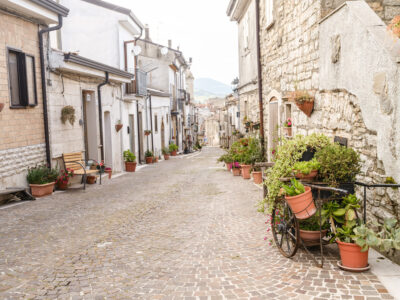
Festa del Vicino (Neighbours’ Festival)
Festa del Vicino in Celle di San Vito The Festa del Vicino …
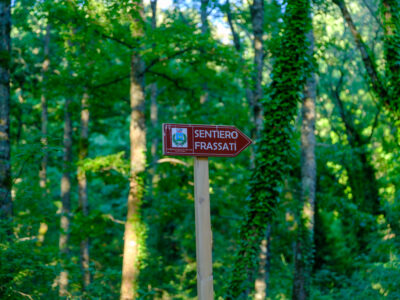
Sentiero Frassati
The Sentiero Frassati between Castelluccio Valmaggiore, Celle …
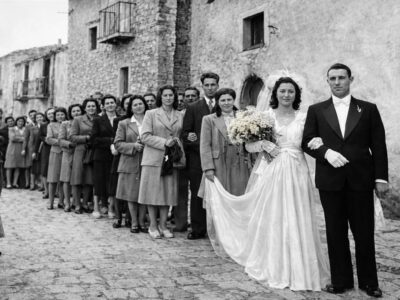
Peccelatiélle of Faeto
In Faeto, once upon a time, even a tarallo could tell of a …