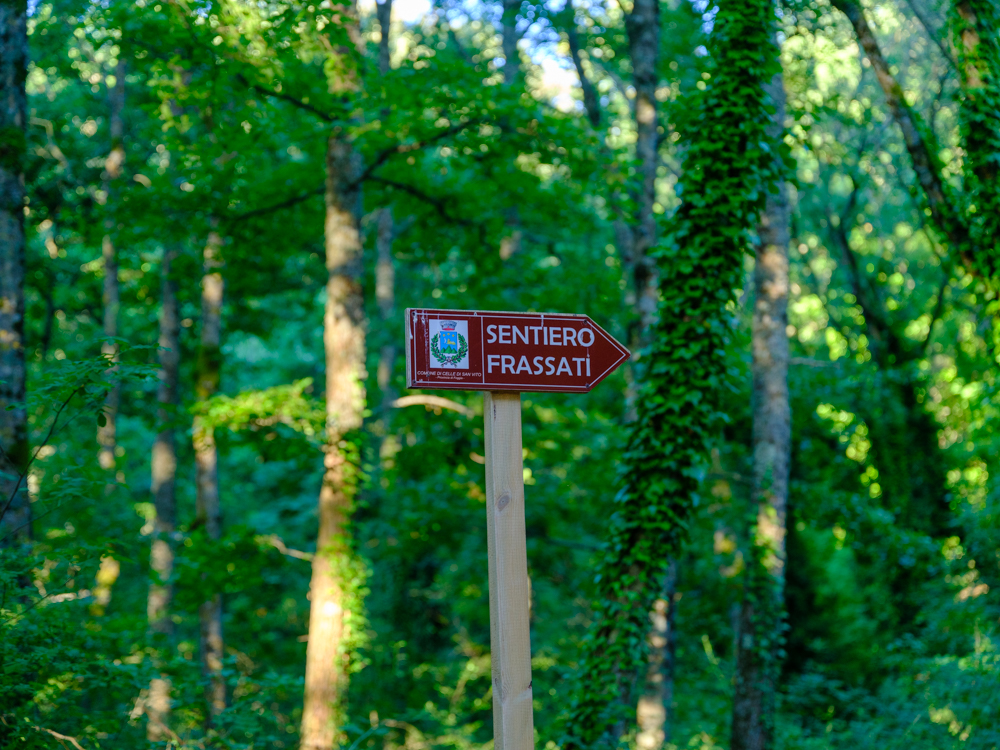
Sentiero Frassati
Reading time:
The Sentiero Frassati between Castelluccio Valmaggiore, Celle and Faeto: a walk through the Monti Dauni. Walk slowly, look far. Some routes do more than link two points on a map.…
The Sentiero Frassati between Castelluccio Valmaggiore, Celle and Faeto: a walk through the Monti Dauni.
Walk slowly, look far
Some routes do more than link two points on a map. The Sentiero Frassati of Puglia is one of them: a path across the Monti Dauni weaving together woods, streams, old country roads and small villages where the landscape still tells the story of the communities who live there.
Opened on 4 September 2011 through the work of the Foggia Section of the Italian Alpine Club, the route runs for about 41 kilometres on a loop linking five municipalities: Roseto Valfortore, Biccari, Castelluccio Valmaggiore, Celle di San Vito and Faeto. The circuit also reaches the summit of Monte Cornacchia, which at 1,151 metres is the highest point in Puglia.
The route can be started from several points and is divided by the CAI guide into six stages, best completed over two or three days. But while the trail covers a large part of the Daunian Subapennines, it is as it passes through Castelluccio Valmaggiore, Celle di San Vito and Faeto that it reaches the heart of the Alta Valle del Celone.
Three neighbouring villages, different in history and traditions, linked by a network of paths that for centuries allowed people, animals and goods to move. Walking them today means rediscovering a dimension of the territory that the speed of modern roads has gradually removed from daily life.
Three villages along the way: Castelluccio Valmaggiore, Celle di San Vito and Faeto
Old mills, mountain landscapes and Franco-Provençal memory
The Sentiero Frassati passes through the centre of Castelluccio Valmaggiore, a village whose history is tied to its strategic position in the Alta Valle del Celone. The tower of Byzantine origin, the churches, the fountains and the old wash-houses tell of a territory where the availability of water played a fundamental role in community life.
Leaving the village towards Celle di San Vito, the route moves away from the houses and descends to the valley floor. The CAI guide describes a stretch of just over three kilometres, with a descent leading to the Celone stream, where you come across an old water mill at about 526 metres above sea level.
It is a significant presence. For generations these small mills used the power of water to grind wheat, linking work in the fields with the food needs of families. Today their remains bear witness to the rural history of the valley and the relationship between communities and watercourses.
After crossing the stream, the route climbs back up to Celle di San Vito, reaching the village at about 720 metres. Here the natural landscape gives way to a distinctive cultural history: together with Faeto, Celle is one of the two Franco-Provençal-speaking communities of Puglia, a legacy of settlers from the French-speaking area during the Angevin period.
Walking the village streets means encountering a linguistic heritage still recognisable in place names, collective memory and local traditions. The Arco dei Provenzali, the old fountains and the Church of Santa Caterina are among the sights worth a stop.
From Celle, the Sentiero Frassati continues to Faeto with a relatively short stage of just over two kilometres, which the CAI guide says takes about 45 minutes. The route passes near the sports facilities, crosses a picnic area and continues along a path with short climbs and descents.
Faeto, at over 800 metres above sea level, is one of the highest municipalities in Puglia. Its historic centre, its architectural heritage and the Mother Church of the Santissimo Salvatore tell of a community which, together with neighbouring Celle, has preserved one of the most distinctive linguistic identities in southern Italy.
In just over five kilometres between Castelluccio Valmaggiore, Celle di San Vito and Faeto, walkers cross different landscapes and stories: from the memory of the water mills to Franco-Provençal culture, from medieval remains to the woods and hills surrounding the three villages.
It is this closeness between such different places that makes the stretch of the Sentiero Frassati through the Alta Valle del Celone particularly interesting.
The Sentiero Frassati: the story of a path and a name
Pier Giorgio Frassati and spiritual walking routes
The trail is dedicated to Pier Giorgio Frassati (1901–1925), a young man from Turin who loved the mountains, a member of the Italian Alpine Club and a figure deeply associated with the values of solidarity, friendship and faith.
Beatified by John Paul II in 1990 and canonised on 7 September 2025 by Pope Leo XIV, Pier Giorgio Frassati saw the mountains not only as a place to test one’s physical limits but also as a space for personal and spiritual growth.
From his example came the national Sentieri Frassati project, developed from the 1990s through cooperation between the Italian Alpine Club and various associations, with the aim of identifying routes that combine natural value with historical, human and religious value.
The Sentiero Frassati of Puglia, opened in 2011, is one expression of this project. Creating it brought new life to old paths, country roads and links between communities that preserve important evidence of the history of the Monti Dauni.
The walk thus becomes an experience that does not end with reaching a destination. It is a way of observing the landscape, meeting people and understanding how nature and human presence have shaped the identity of the territory over the centuries.
What you will find along the way
Flora, views and landscapes of the Daunian Subapennines
The Sentiero Frassati of Puglia crosses different natural settings, alternating woods, cultivated fields, old country roads, small streams and panoramic ridges.
On the full circuit, one of the most significant places is Monte Cornacchia, the highest peak in the region, reached on the stretch running along the border between Biccari and Faeto. The route then continues towards Biccari, through mountain landscapes and forests, before reaching Castelluccio Valmaggiore and the villages of the Alta Valle del Celone.
On the stretch between Castelluccio Valmaggiore and Celle di San Vito, the landscape is shaped above all by the Celone stream. The route descends to the water, passes the remains of the old mills and climbs back up to the village, offering glimpses of a rural setting where human work and the natural features of the territory have remained closely linked.
Between Celle di San Vito and Faeto, the path crosses a more intimate hill and mountain landscape, where the closeness of the two villages also tells of their shared history. Franco-Provençal, still part of the local cultural heritage, is a thread of continuity between the two communities, despite the different events that have marked them over time.
Beyond Faeto, the circuit continues towards Roseto Valfortore, also crossing the Bosco Difesa, where the vegetation is mainly Turkey oak and beech. It is one of the stretches that best conveys the forest character of the Daunian Subapennines, particularly beautiful in spring and autumn.
The official guide of the Italian Alpine Club gives the whole loop a length of about 41 kilometres, a total height gain of about 1,400 metres and a difficulty grade of E – Hiking, with an estimated walking time of about 13 hours, best spread over two or three days.
The short distances between some of the villages should not lead you to underestimate the route. The height gains, the terrain and the stream crossings call for suitable footwear, attention to the weather and preparation in line with the features of each stage.
If you are planning a hike, it is advisable to check the information on the Sentiero Frassati of Puglia website beforehand and to check the current condition of the trail.
The route is also a chance to discover other walking routes through the Monti Dauni. In particular, some stretches of the Via Francigena del Sud run close to or coincide with the Sentiero Frassati, placing the Alta Valle del Celone within a wider network of historic and spiritual itineraries.
Keep discovering Castelluccio Valmaggiore
The Sentiero Frassati is one of the most rewarding ways to connect with the history and landscape of this territory.
Castelluccio Valmaggiore, Celle di San Vito and Faeto hold different but deeply connected heritages: medieval remains, languages and traditions, old mills, farming culture and the natural landscapes that accompany the life of their communities.
Discover more places in the Alta Valle del Celone: walk the woodland trails, visit the historic centres, learn about Franco-Provençal traditions and let yourself be guided by the flavours of a cuisine that keeps its bond with the land.
Because crossing a territory on foot also means this: discovering that between two neighbouring villages there can be much more than a road.
AT A GLANCE
Where
Castelluccio Valmaggiore, Celle di San Vito, Faeto
Suitable for
Everyone
Interests
SHARE


PODCAST
L’Alta Valle del Celone
Ten episodes exploring Celle di San Vito, Faeto and Castelluccio Valmaggiore through the voices of those who live in these places every day.
An audio journey through stories, memories, traditions, landscapes and flavours, told by the people of the three towns. The podcast guides visitors in discovering the authentic soul of the Alta Valle del Celone: a land of forests, villages and vibrant communities, where every voice preserves a piece of its identity.
Recommended experiences
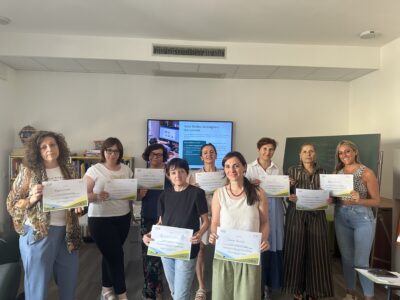
Alta Valle del Celone: a training day on communicating the destination
A meeting in Castelluccio Valmaggiore on the future of tourism …
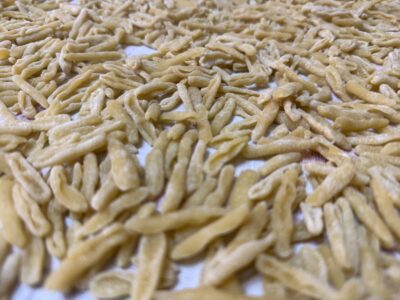
Handmade Pasta Festival
Handmade Pasta Festival in Castelluccio Valmaggiore. Summer in …

Village-style bread balls
Bread balls in Castelluccio Valmaggiore. The ingenuity of …
Keep exploring
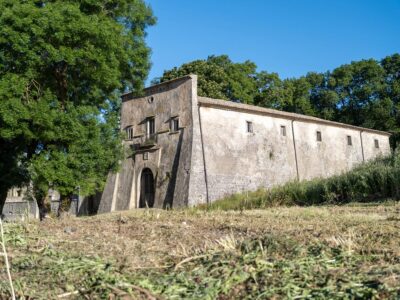
Casale San Vito
Casale San Vito at Celle di San Vito Exploring the Apulian …
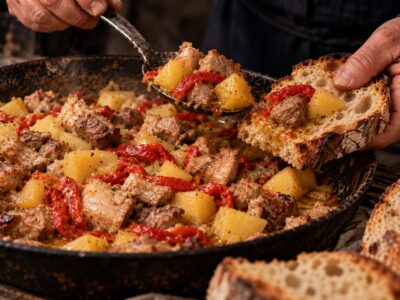
“Féte de lu Cajúnne”, the pork festival
The first Sunday of February in Faeto: when the cold brings a …

Via Francigena (Castelluccio Valmaggiore)
In the footsteps of pilgrims: the Via Francigena at Castelluccio …