
Saint Joseph’s Bonfire in Faeto
Tempo di lettura:
The Fire That Welcomes Spring Every year, on March 19, Faeto lights up. The flames of the bonfires rise into the night sky over the Monti Dauni (Dauni Mountains), marking…
The Fire That Welcomes Spring
Every year, on March 19, Faeto lights up. The flames of the bonfires rise into the night sky over the Monti Dauni (Dauni Mountains), marking something greater than a religious celebration: they announce the end of winter, the return of light, and the renewal of an ancient bond between the community and its land. The Saint Joseph’s Bonfire in Faeto is one of those events that cannot easily be described, because it belongs to that category of experiences that can only truly be understood by living them firsthand.
We are in the Alta Valle del Celone, in the inland area of the Province of Foggia, more than 700 meters above sea level. Here, the March wind is still biting, but the fire brings warmth and not only to the body.
Faeto: A Village That Preserves the Extraordinary
Faeto is a village that surprises first-time visitors. Not only because of its medieval profile perched on the hillside, nor simply because of the panorama stretching across the Apennines and, on clear days, reaching all the way to the sea. What makes it truly unique is something deeper: Faeto is the only Franco-Provençal-speaking community in Puglia (Apulia), a linguistic and cultural enclave that has remained intact for centuries, most likely inherited from ancient French settlements dating back to the Angevin period.
The Franco-Provençal traditions of Faeto are not museum folklore: they survive in the language still spoken by the elders, in songs, and in the community’s collective memory. They also live on in the way this village celebrates its festivals, with authenticity and without unnecessary embellishment.
The “Focarine”: Pagan Roots and Christian Devotion
A Ritual with Ancient Origins
The Saint Joseph’s bonfires, locally known as focarine, have their roots in centuries of cultural layering. Long before March 19 became the feast day of the patron saint of workers and families, spring bonfires were already a ritual, a collective gesture to drive away the cold, purify the fields, and pray for a fruitful harvest.
The Church embraced this practice without erasing it, transforming the ritual fire into an expression of devotion to Saint Joseph. The result is that distinctive blend of sacred and secular that characterizes the most vibrant and authentic festivals of Southern Italy. Throughout the Province of Foggia, the March 19 bonfires are celebrated in many villages of the Monti Dauni as a powerful expression of local identity, and Faeto is no exception.
How the Celebration Takes Place
On the evening of March 19, the community gathers around bonfires lit in significant locations throughout the village. This is not an event organized for tourists: it is an authentic celebration lived from within, where guests are warmly welcomed but are not the focus. Paradoxically, this makes the experience even more meaningful.
Around the fire, people sing, share stories, and enjoy each other’s company. Hospitality is an essential part of the ritual: tables are filled with local specialties, from bruschetta to Faeto ham, one of the finest cured meats of the Daunian Sub-Apennines, as well as the inevitable zeppole di San Giuseppe, the traditional pastry that symbolizes this feast throughout Puglia. In this setting, the gastronomy of the Monti Dauni is far more than an accompaniment, it is an integral part of the festival’s meaning.
What to Do in Faeto on March 19
Planning Your Visit
If you are wondering what to do in Faeto on March 19, the most honest answer is: let yourself be surprised. The bonfires are lit at sunset, so it is worth arriving in the afternoon to explore the historic center before night falls. The streets of the medieval village, its churches, and its stone alleyways all take on a different atmosphere once the fire begins to cast its orange glow.
Faeto can be reached easily from Foggia in about an hour. Visitors coming from Bari or Naples can include the village in a weekend itinerary through inland Puglia, perhaps combining it with other villages of the Alta Valle del Celone or a section of the southern Via Francigena, which crosses this part of the Daunian Sub-Apennines and offers fascinating walking routes even at this time of year.
A Region Best Explored Slowly
The Saint Joseph’s Bonfire is also an excellent reason to discover a region that deserves far more than a single visit. In spring, the medieval villages of the Province of Foggia are among the least visited and most rewarding destinations for those who enjoy slow tourism in inland Puglia: landscapes that remain largely untouched, outstanding artisanal and gastronomic products, and a human scale that many better-known destinations have long since lost.
Discover the Other Heritage of the Alta Valle del Celone
The Saint Joseph’s Bonfire is only one of the many reasons why Faeto is worth visiting. This village preserves traditions, places, and flavors that tell the rich and fascinating story of a community that has remained true to itself through the centuries.
Explore the rest of the website and discover the places to visit, nature trails, gastronomic specialties, and intangible traditions of Faeto and the Alta Valle del Celone. There is much more waiting to be discovered.
AT GLANCE
Where
Faeto
Type
Suitable for
All
Interests
SHARE


PODCAST
L’Alta Valle del Celone
Ten episodes exploring Celle di San Vito, Faeto and Castelluccio Valmaggiore through the voices of those who live in these places every day.
An audio journey through stories, memories, traditions, landscapes and flavours, told by the people of the three towns. The podcast guides visitors in discovering the authentic soul of the Alta Valle del Celone: a land of forests, villages and vibrant communities, where every voice preserves a piece of its identity.
Recommended experiences
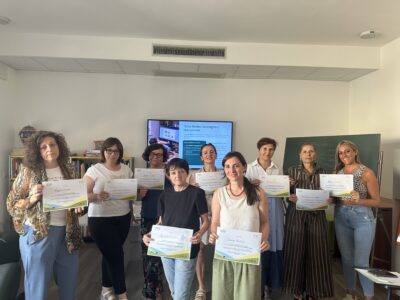
The Highest Municipality in Puglia
The geography of the inland Foggia area holds remarkable …

Fresh Pasta Festival in Castelluccio Valmaggiore
Summer in the small villages of the Puglian (Apulian) Apennines …
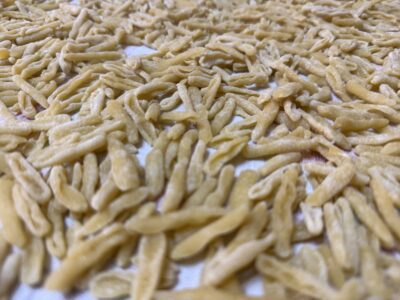
Fresh Pasta in Celle di San Vito
There is an inseparable bond between the table of a small …
Keep exploring
The Highest Municipality in Puglia
The geography of the inland Foggia area holds remarkable …
Fresh Pasta Festival in Castelluccio Valmaggiore
Summer in the small villages of the Puglian (Apulian) Apennines …
Fresh Pasta in Celle di San Vito
There is an inseparable bond between the table of a small …

Ppìzze do le ccìcule: The Ciccioli Pizza of the Franco-Provençal Communities
There is a dough that carries the flavor of January. Of …