Santo Legno (the Holy Wood)
Reading time:
On Ascension Day, Faeto sets off on foot. Every year, along Via Santa Filomena, the people of the village climb towards the Campo Romano area, where a wooden cross has…
Santo Legno in Faeto: when faith climbs towards Campo Romano
On Ascension Day, Faeto renews its bond with one of its most characteristic religious traditions: the procession of the Santo Legno (the Holy Wood). Along Via Santa Filomena, the devotional route leads to the Campo Romano area, west of the village, where a wooden cross has been an important landmark for the community for generations. It is one of the most significant moments in the calendar of popular religious traditions in this corner of the Daunian Subapennines.
The rite keeps the charm of old community celebrations: the slow pace of the faithful, the prayers and songs accompanying the climb to the cross, in a mountain landscape that becomes part of the religious experience. A gesture of devotion in which the history, spirituality and sense of belonging of a community deeply attached to its roots can be recognised.
The procession of the Santo Legno: history and meaning
The procession of the Santo Legno is linked to the feast of the Ascension, the Christian feast commemorating Jesus’ ascent into heaven forty days after the Resurrection. The walk to the cross at Campo Romano takes on a symbolic meaning: the climb of the faithful recalls the upward movement and the spiritual effort of humanity to draw closer to God. It is a route where faith and landscape are intertwined, turning a simple country path into a place of Faeto’s religious memory.
One of the most evocative accounts of the tradition concerns the eve of the procession. In the past, children walked the streets of the village ringing a small bell and announcing the next day’s procession with a call in the local Franco-Provençal: «’Ndelinne… ’Ndelinne… ’Ndelinne… demmà mattinne a Sant Linne…» (“tomorrow morning to the Santo Legno”). It was a simple, shared way of involving the whole community, entrusting even the youngest with handing down a custom that united faith and linguistic identity.
In the past the procession was also joined by the religious confraternities with their banners, accompanying the parish priest and the faithful along the way. Songs, rosaries, prayers and litanies marked the walk to the cross, where the blessing took place. The presence of the confraternities showed how deeply the celebration was rooted in the religious and social organisation of the village.
The wooden cross of Campo Romano is thus much more than a simple religious object: it is the focal point of a tradition linking the land with the spirituality of the community. Those interested in rural sacred art in Puglia will recognise here a testimony to the relationship between popular devotion, landscape and collective memory, one of the most significant aspects of the cultural heritage of the inland areas of the southern Apennines.
Faeto and its rites: a tradition in several chapters
The Santo Legno also keeps a deep bond with Faeto’s farming and pastoral history. The blessing given by the priest in front of the cross traditionally extends to the faithful, their families, the fields, the animals and the tools used in farm work. A rite expressing the relationship between faith and daily life, in a community where harvests, livestock and work on the land were for centuries the foundations of subsistence.
Another characteristic aspect of the celebration is conviviality and the sharing of food. According to local accounts, once the blessing was over, participants used to gather near the Fontana Giacchètte, at the Costoro estate, to eat bread and frittata together, accompanied by fresh milk offered by shepherds and farmers. It was a moment of sharing in which the community’s resources became an occasion for meeting and solidarity.
Over the years this custom gave way to the handing out of panèlle de Sante Linne, small blessed loaves linked to the tradition of the Santo Legno. One particularly meaningful custom was for each participant to bring a panella to neighbours unable to reach the procession. A gesture that sums up the deepest meaning of the celebration: faith as a collective experience, able to keep alive the bonds between people.
The tradition of the Santo Legno is part of the wider heritage of events and traditions of Faeto, where processions, blessings and popular customs tell a story of spirituality, farm work and community solidarity. For visitors, getting to know these rites means discovering a side of Franco-Provençal culture that still finds expression in the memory, language and traditions of the territory.
Discover the Alta Valle del Celone
The Santo Legno is just one of the threads woven into Faeto’s precious heritage. Explore the other places, traditions and itineraries of the Alta Valle del Celone: from the history of the Franco-Provençal villages to the nature of the Monti Dauni, from local food and wine to the routes between Faeto, Celle di San Vito and Castelluccio Valmaggiore.
AT A GLANCE
Where
Faeto
Type
Suitable for
Everyone
Interests
SHARE


PODCAST
L’Alta Valle del Celone
Ten episodes exploring Celle di San Vito, Faeto and Castelluccio Valmaggiore through the voices of those who live in these places every day.
An audio journey through stories, memories, traditions, landscapes and flavours, told by the people of the three towns. The podcast guides visitors in discovering the authentic soul of the Alta Valle del Celone: a land of forests, villages and vibrant communities, where every voice preserves a piece of its identity.
Recommended experiences
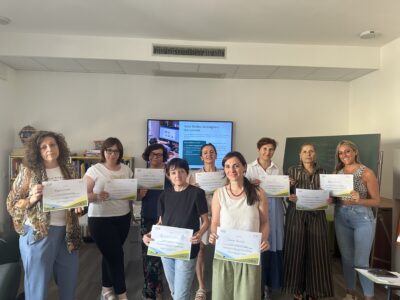
Alta Valle del Celone: a training day on communicating the destination
A meeting in Castelluccio Valmaggiore on the future of tourism …
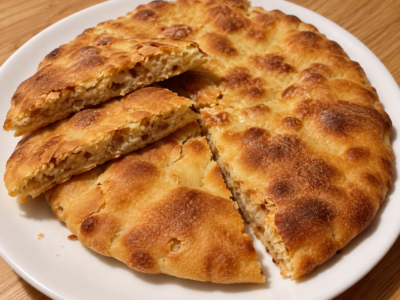
Pizza with pork crackling
La pizze dò le cíccule: the crackling pizza of the …
Keep exploring

Church of San Vito, Celle di San Vito
The mountain landscape of the Daunian Apennines is dotted with …
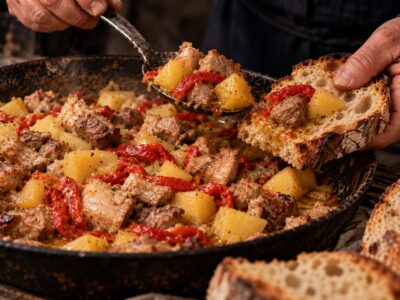
“Féte de lu Cajúnne”, the pork festival
The first Sunday of February in Faeto: when the cold brings a …
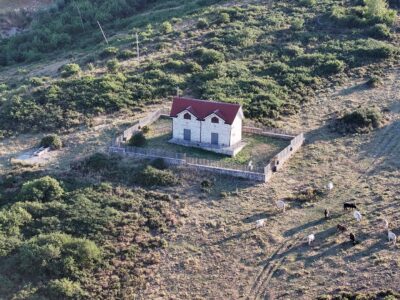
Rifugio Casonetto CAI
Rifugio Casonetto: the only CAI refuge in Puglia. At 700 metres …