
Procession of the ccòcce de mmòrte in Faeto
Tempo di lettura:
The autumn twilight transforms the atmosphere of the small Apennine villages, revealing their most intimate and mysterious side. In the heart of the Monti Dauni (Dauni Mountains), on the evening…
The autumn twilight transforms the atmosphere of the small Apennine villages, revealing their most intimate and mysterious side. In the heart of the Monti Dauni (Dauni Mountains), on the evening of November 2, the Procession of the ccòcce de mmòrte in Faeto takes place once again, an ancestral ritual in which the local community lights up the night to guide the souls of the departed and protect the village from evil spirits.
The stone streets fill with pumpkins carved into frightening faces, illuminated from within by flickering candles, becoming the visual symbol of an unbreakable bond between the world of the living and that of the dead.
This event is the centerpiece of the celebrations for the Faeto All Souls’ Day Festival on November 2, attracting scholars and travelers fascinated by autumn rituals. Those who visit the village during this period find themselves immersed in a narrative of soft lights, respectful silence, and the glow of flames casting shadows across the walls of the houses.
The event enriches the cultural landscape of the major autumn events in the Monti Dauni, offering a direct experience of the deepest roots of southern Italian folklore.
The charm of the medieval village in autumn
Exploring this area on the eve of winter offers the opportunity to discover an authentic dimension, ideal for those wondering what to do in Faeto in autumn. The village welcomes visitors with its well-preserved medieval layout, characterized by narrow streets, stone arches, and hilltop houses overlooking the surrounding forests.
The surrounding landscape, painted with the warm colors of autumn foliage, invites visitors to experience slow tourism in Italy’s inland areas, where every stone tells the story of geographical isolation transformed into cultural wealth. Walking through the village streets during the preparations for the festival means witnessing a spontaneous community effort, where older generations teach children the art of hollowing out and carving pumpkins, keeping the spirit of the place alive.
Historical origins and Franco-Provençal identity
The roots of the procession are closely connected to the very origins of the community. This celebration is a fundamental element in understanding the village of Faeto and its traditions, whose history differs significantly from that of the surrounding region of Puglia. Together with the nearby village of Celle di San Vito, the municipality forms an extraordinary linguistic and historical enclave, serving as a landmark for Franco-Provençal village tourism in Puglia.
The origins of this enclave date back to the 1224 edict of Charles I of Anjou, which initiated the settlement of Franco-Provençal families in this specific part of Puglia. The settlement became firmly established after 1269, when a group of Angevin soldiers and their families settled permanently in the area. This historical legacy is still reflected today in the language spoken daily and in the preservation of customs linked to the great European late-autumn rituals, with clear similarities to Celtic traditions and transalpine celebrations.
The anthropological ritual and traditional gastronomy
The procession of illuminated pumpkins is part of the broader traditions of November in the Daunian Sub-Apennines, where the cult of the dead is intertwined with ancient agricultural and protective practices. Alongside its purely ritual aspect, the community’s collective memory is expressed through the preparation of traditional foods associated with the land and this rural observance.
Throughout the evening, the kitchens of the village fill the air with the aromas of winter dishes. Curiosity about the preparation of cicciùttele of Faeto encourages many food enthusiasts to discover this traditional humble dish made from boiled wheat and corn, traditionally eaten in every household and offered as a symbol of community sharing.
The entire route of the procession, winding from the medieval center toward the rural countryside and burial grounds, is directly connected to the network of historic walking routes in the Alta Valle del Celone. This continuity between the urban setting and unspoiled nature enhances the itinerary not only as an act of devotion but also as a cultural hiking route of remarkable scenic value.
Discover the Alta Valle del Celone
The ritual of the ccòcce de mmòrte opens the door to a rich local heritage that deserves to be explored in every season.
Discover the other places in Castelluccio Valmaggiore and the Alta Valle del Celone: continue exploring the website to learn about the nature trails connecting the three villages, the medieval towers, the traditional cuisine of the inland area, and the calendar of historic rituals that keep the identity of this Puglian valley alive.
AT GLANCE
Where
Faeto
Type
Suitable for
All
Interests
SHARE


PODCAST
L’Alta Valle del Celone
Ten episodes exploring Celle di San Vito, Faeto and Castelluccio Valmaggiore through the voices of those who live in these places every day.
An audio journey through stories, memories, traditions, landscapes and flavours, told by the people of the three towns. The podcast guides visitors in discovering the authentic soul of the Alta Valle del Celone: a land of forests, villages and vibrant communities, where every voice preserves a piece of its identity.
Recommended experiences
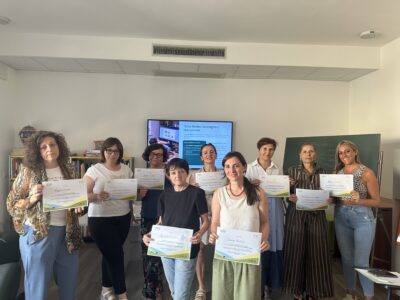
The Highest Municipality in Puglia
The geography of the inland Foggia area holds remarkable …

Fresh Pasta Festival in Castelluccio Valmaggiore
Summer in the small villages of the Puglian (Apulian) Apennines …
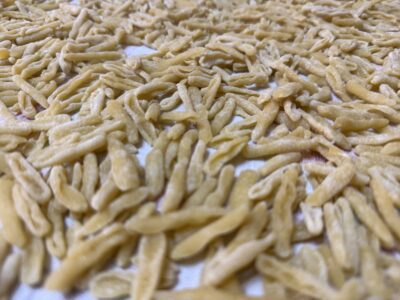
Fresh Pasta in Celle di San Vito
There is an inseparable bond between the table of a small …
Keep exploring
The Highest Municipality in Puglia
The geography of the inland Foggia area holds remarkable …
Fresh Pasta Festival in Castelluccio Valmaggiore
Summer in the small villages of the Puglian (Apulian) Apennines …
Fresh Pasta in Celle di San Vito
There is an inseparable bond between the table of a small …

Ppìzze do le ccìcule: The Ciccioli Pizza of the Franco-Provençal Communities
There is a dough that carries the flavor of January. Of …