Lu Pagljare in Faeto
Tempo di lettura:
Exploring the mountainous landscapes of Puglia often reveals discoveries that redefine the traditional image of the region. Far from the coastal plains, the mountains of the Daunian Apennines preserve the…
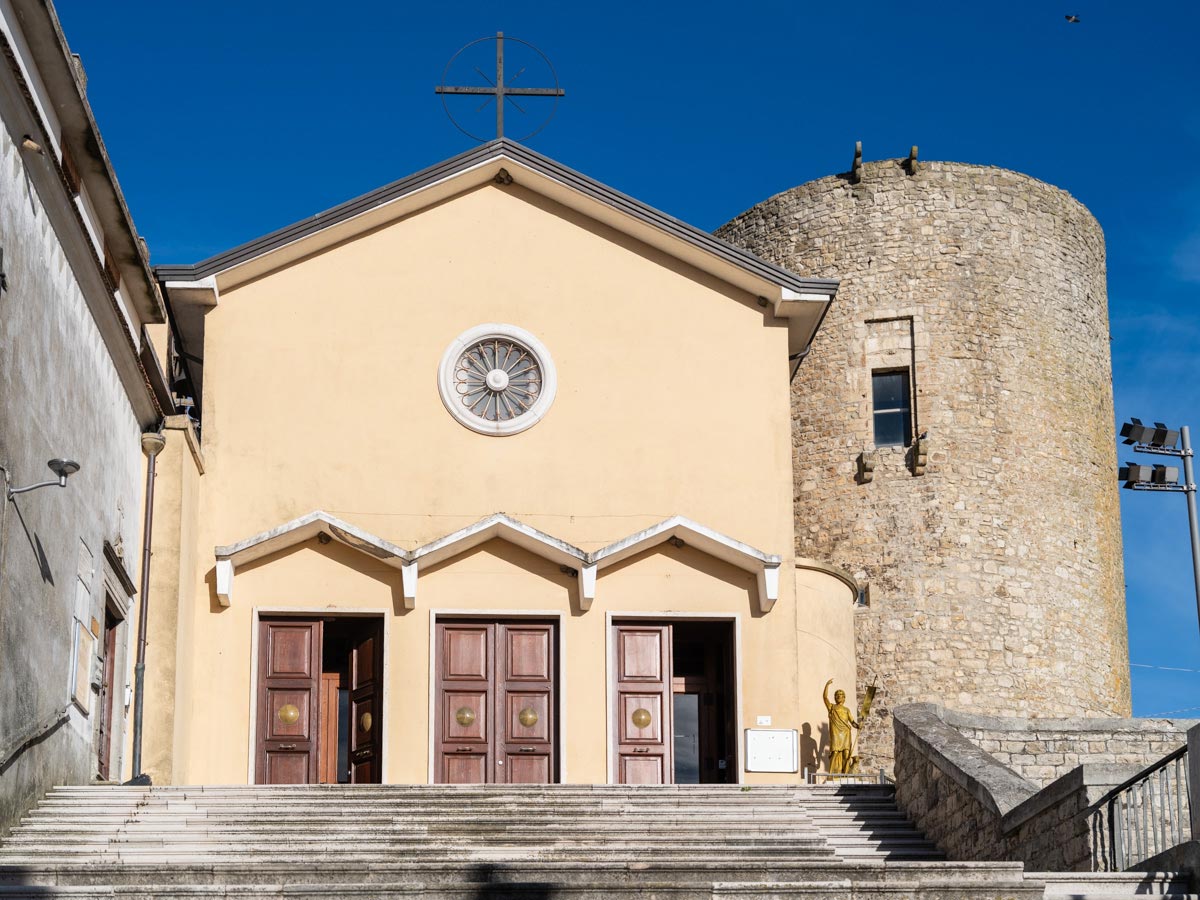
Exploring the mountainous landscapes of Puglia often reveals discoveries that redefine the traditional image of the region. Far from the coastal plains, the mountains of the Daunian Apennines preserve the tangible traces of an agro-pastoral civilization that shaped stone to meet the harsh demands of life at high altitude. In the countryside surrounding the highest village in the region, the structure known as Lu Pagljare in Faeto stands as one of the finest examples of vernacular architecture, fitting perfectly into the tradition of the dry-stone huts of inland Puglia. These buildings share the same construction techniques as the trulli while adapting them to the climatic and geographical conditions of the mountains.
These ancient shelters of stone and earth were not merely storage buildings, but the foundations of an economic and social system based on transhumance and the cultivation of high-altitude cereal crops. Their rediscovery now attracts discerning travelers, photographers, and enthusiasts of ethno-anthropology eager to document the remains of a rural culture that made harmony with the natural environment its defining characteristic.
The Charm of the Village and the Culture of Stone
The village welcomes visitors with a dense network of narrow streets and hillside houses, where the heritage of the Franco-Provençal linguistic enclave can still be felt in every square. For those interested in the rural architecture of Faeto and wondering what to see in the surrounding countryside, the ancient mountain settlements offer an unmissable experience.
The village serves as the ideal base for guided excursions and cultural walks, making it a key destination within the slow tourism routes dedicated to the historic villages of the Daunian Sub-Apennines. The preservation of the surrounding landscape allows visitors to appreciate how these stone structures blend seamlessly into the natural contours of the hillsides rather than altering them, creating striking views for anyone who enjoys exploring at a leisurely pace.
The Structure and Construction Secrets of Lu Pagljare
Understanding this heritage requires a close examination of its building techniques. To gain a deeper understanding of Lu Pagljare in Faeto and its history, it is essential to observe the craftsmanship of the master builders of the past.
The pagliaio is an ancient conical stone structure that fully represents the residential architecture of a civilization that has now disappeared. The building is constructed entirely using dry-stone techniques with chianchètta, a flat, squared stone typical of the local subsoil. Its ground plan is circular, while in elevation it takes the form of a truncated cone, capped with a large limestone slab that served as a protective roof against the elements.
The interior is remarkably well insulated. The walls could be plastered with clay or light-colored earth to provide waterproofing and retain the warmth of the hearth. This type of building was generally constructed against a hillside and partially embedded within it, so that the full shape of the structure could only be clearly appreciated from the inside. From the outside, it appeared simply as a convex stone wall with only the entrance door visible. The organization of the surrounding space was equally meticulous: each pagliaio had its own threshing floor for processing wheat, as well as the custére or the pannìzze, dedicated shelters for livestock.
These structural features enabled shepherds to survive during the long summer grazing season. Mapping these sites within the network of rural settlements in the Monti Dauni (Dauni Mountains) reveals the extensive system of seasonal villages that once populated the Apennines, illustrating the agro-pastoral civilization and the traditions of the Alta Valle del Celone.
Slow Itineraries Through Rural Heritage and Local Cuisine
The enhancement of this tangible heritage perfectly complements today’s approach to experiencing the region. These historic structures can be found along the trekking and slow tourism routes around Faeto, walking trails that connect the dense Faeto Forest with the cultivated areas of the valley. For hikers exploring these mountain paths, encountering the pagliari offers a meaningful opportunity to connect with the agricultural past of the Capitanata.
A visit to the countryside is naturally complemented by a stop in the village itself. To gain a broader understanding before setting out, visitors can consult the information provided by the Faeto Civic Museum regarding opening hours and monuments, where agricultural tools from the rural civilization and historical reconstructions of Lu Pagljare are preserved.
Discover the Alta Valle del Celone
The historic chianchètte of Lu Pagljare bear witness to the ingenuity of a mountain civilization that succeeded in making the peaks of the Capitanata hospitable.
Discover the other places in Faeto and the Alta Valle del Celone: continue your exploration to learn about the medieval monuments, the Via Francigena, and the historic villages of the Franco-Provençal enclave.
AT GLANCE
Where
Faeto
Suitable for
All
SHARE


PODCAST
L’Alta Valle del Celone
Ten episodes exploring Celle di San Vito, Faeto and Castelluccio Valmaggiore through the voices of those who live in these places every day.
An audio journey through stories, memories, traditions, landscapes and flavours, told by the people of the three towns. The podcast guides visitors in discovering the authentic soul of the Alta Valle del Celone: a land of forests, villages and vibrant communities, where every voice preserves a piece of its identity.
Recommended experiences
The Highest Municipality in Puglia
The geography of the inland Foggia area holds remarkable …

Fresh Pasta Festival in Castelluccio Valmaggiore
Summer in the small villages of the Puglian (Apulian) Apennines …
Fresh Pasta in Celle di San Vito
There is an inseparable bond between the table of a small …
Keep exploring
The Highest Municipality in Puglia
The geography of the inland Foggia area holds remarkable …
Fresh Pasta Festival in Castelluccio Valmaggiore
Summer in the small villages of the Puglian (Apulian) Apennines …
Fresh Pasta in Celle di San Vito
There is an inseparable bond between the table of a small …
Ppìzze do le ccìcule: The Ciccioli Pizza of the Franco-Provençal Communities
There is a dough that carries the flavor of January. Of …