
“Féte de lu Cajúnne”, the pork festival
Reading time:
The first Sunday of February in Faeto: when the cold brings a celebration. Every year, on the first Sunday of February, Faeto is transformed. The scent of grilled meat rises…
The first Sunday of February in Faeto: when the cold brings a celebration.
Every year, on the first Sunday of February, Faeto is transformed. The scent of grilled meat rises through the stone lanes, the tables fill with cured meats and beans, and the Franco-Provençal dialect echoes among the voices of those who stayed and those who return. This is the Faeto Pork Festival, known by its original name Féte de lu Cajúnne: an event held since 1982 that keeps alive one of the most deeply rooted farming traditions of the Alta Valle del Celone, the winter processing of the pig and the preparation of food to feed the family through the year.
If you are wondering what to do in Faeto in winter, or want to discover February events in the Monti Dauni away from the usual tourist circuits, this festival is a real answer: an authentic occasion made of ancient gestures and unmistakable flavours.
Faeto: a village suspended between history and linguistic identity
Faeto lies in the hinterland of the province of Foggia, clinging to a spur of the Monti Dauni at over 800 metres above sea level. It is no ordinary village among the medieval villages of the Daunian Subapennines: together with Celle di San Vito, it is one of the two municipalities in Puglia where the Franco-Provençal language is still spoken, an independent Romance language, distinct from both French and Occitan, whose presence here is linked to the settlement of Franco-Provençal communities in the Angevin period.
Together with Celle di San Vito, Faeto forms a linguistic island unique in southern Italy. Here the Franco-Provençal language is not a museum piece: it is still spoken, used in songs, at festivals, in nicknames. The Féte de lu Cajúnne is this too, an event that brings the local language to the centre of the square, in the names of the dishes and in the voices of the elders who hand down the recipe for suffrì e panùnte.
The history of the festival: from family slaughtering to the sagra
The tradition of the pig in the Monti Dauni is deeply rooted in the farming economy. Between December and February, when temperatures dropped low enough to preserve meat without refrigeration, every family slaughtered its pig: a time of hard work and plenty, of community and sharing.
It was not just about food. It was a ritual that marked the calendar of the farming year, shared out resources and strengthened ties between families. Nothing of the pig was wasted: every part had its use, every cut its own preparation.
Since 1982 this farming tradition has taken a new form in the Féte de lu Cajúnne, the Faeto Pork Festival. The event presents to the public the gestures, techniques and dishes that once belonged to domestic life. What used to take place in homes and farm buildings thus becomes an occasion for meeting and passing on culture, allowing new generations to learn about an important part of the village’s food and social history.
The star: the black pig of Faeto
At the heart of the Féte de lu Cajúnne is the black pig of the Monti Dauni, bound up with the livestock-farming tradition of Faeto and the surrounding area. Hardy and well suited to mountain environments, it is also valued through free-range farming in a landscape of woods and pastures. The festival is a chance to get to know this agricultural heritage and the know-how of the producers who still process the meat according to local tradition.
Faeto ham is one of the village’s most representative food products. The local tradition of pork curing also includes capocollo, pancetta, lard, sausages and soppressate, preparations born of the need to preserve meat and now championed by local producers. The festival lets visitors get close to these traditions and discover the relationship between pig farming and Faeto’s food culture.
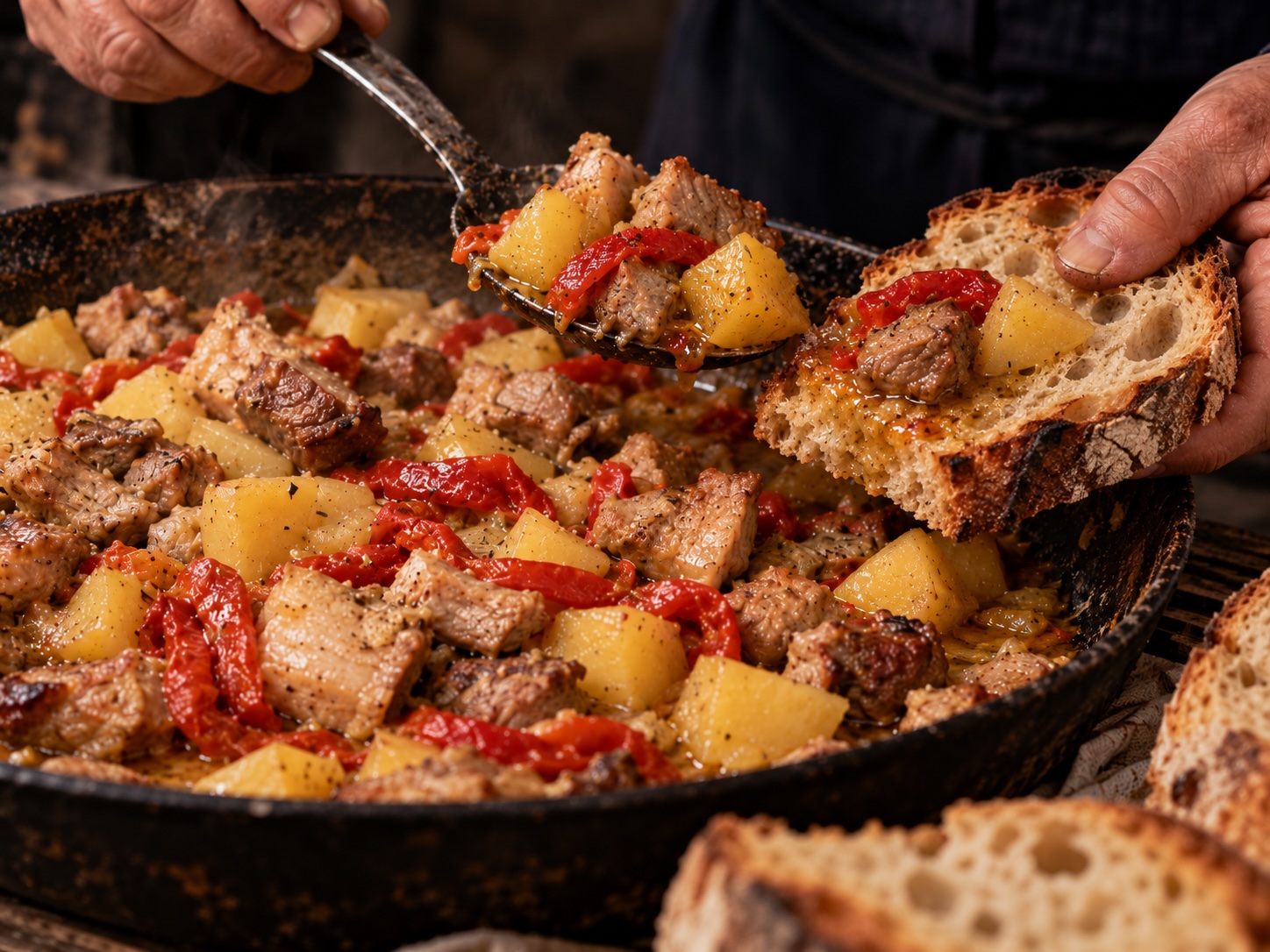
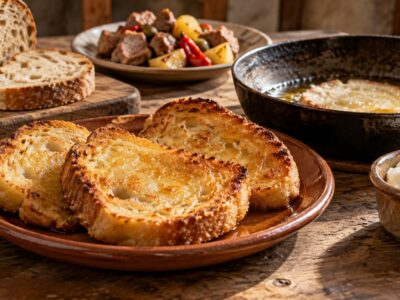
Among the most typical flavours of the festival is suffrì e panùnte, a pork fry served with bread soaked in its juices. The traditional preparation includes pork, potatoes and pickled peppers; some versions also use offal and black olives. The bread soaks up the sauce, a habit deeply tied to peasant cooking. Alongside this speciality there are other dishes of the local tradition, such as beans with pork rind.
A resource for the territory, not just a festival
The Féte de lu Cajúnne is not just a food event. It is one of the most effective ways in which Faeto safeguards its identity and supports its economy. Promoting the black pig and the cured meats involves local farmers, processors and producers, who through the festival can talk about their work and promote the specialities of the area. Alongside the tastings, different editions of the festival may include nature walks, traditional cooking workshops, exhibitions and initiatives to promote the Franco-Provençal language. The festival thus also becomes a chance to discover Faeto beyond its food, getting to know the landscape, history and cultural heritage of the community.
For anyone who wants to plan a weekend among the medieval villages of the Daunian Subapennines, the festival is an ideal starting point: around Faeto open up landscapes of woods and ridges, and routes such as the Sentiero Frassati of Puglia, which also passes through Faeto, Celle di San Vito and Castelluccio Valmaggiore. In winter, however, it is important to check trail and weather conditions, especially when there is snow or ice.
The Faeto Pork Festival is thus also an opportunity to discover the Alta Valle del Celone, where food traditions live alongside a distinctive linguistic heritage, the landscapes of the Monti Dauni and the history of the communities who live there.
Discover Faeto and the Alta Valle del Celone
The Féte de lu Cajúnne is just one of Faeto’s many faces. The village holds a layered medieval history, quiet nature to explore on foot, a language that endures and a cuisine that imitates no other.
Discover more places, traditions and intangible heritage of Faeto and the Alta Valle del Celone: from castles to walking routes, from folk festivals to the flavours of the Daunian hinterland. Every corner of this land has a story to tell: this is only the first.
AT A GLANCE
Where
Faeto
Type
Suitable for
Everyone
Interests
SHARE


PODCAST
L’Alta Valle del Celone
Ten episodes exploring Celle di San Vito, Faeto and Castelluccio Valmaggiore through the voices of those who live in these places every day.
An audio journey through stories, memories, traditions, landscapes and flavours, told by the people of the three towns. The podcast guides visitors in discovering the authentic soul of the Alta Valle del Celone: a land of forests, villages and vibrant communities, where every voice preserves a piece of its identity.
Recommended experiences
Alta Valle del Celone: a training day on communicating the destination
A meeting in Castelluccio Valmaggiore on the future of tourism …
Pizza with pork crackling
La pizze dò le cíccule: the crackling pizza of the …
Keep exploring

Fontana du Paije
Fontana du Paije – Where water tells the life of the village The …

Feast of San Vito, San Modesto and Santa Crescenza
In Celle di San Vito, the intangible heritage of Apennine …

Via Francigena (Castelluccio Valmaggiore)
In the footsteps of pilgrims: the Via Francigena at Castelluccio …
Lamb Castelluccio-style
The culture of a place is expressed through its ability to …