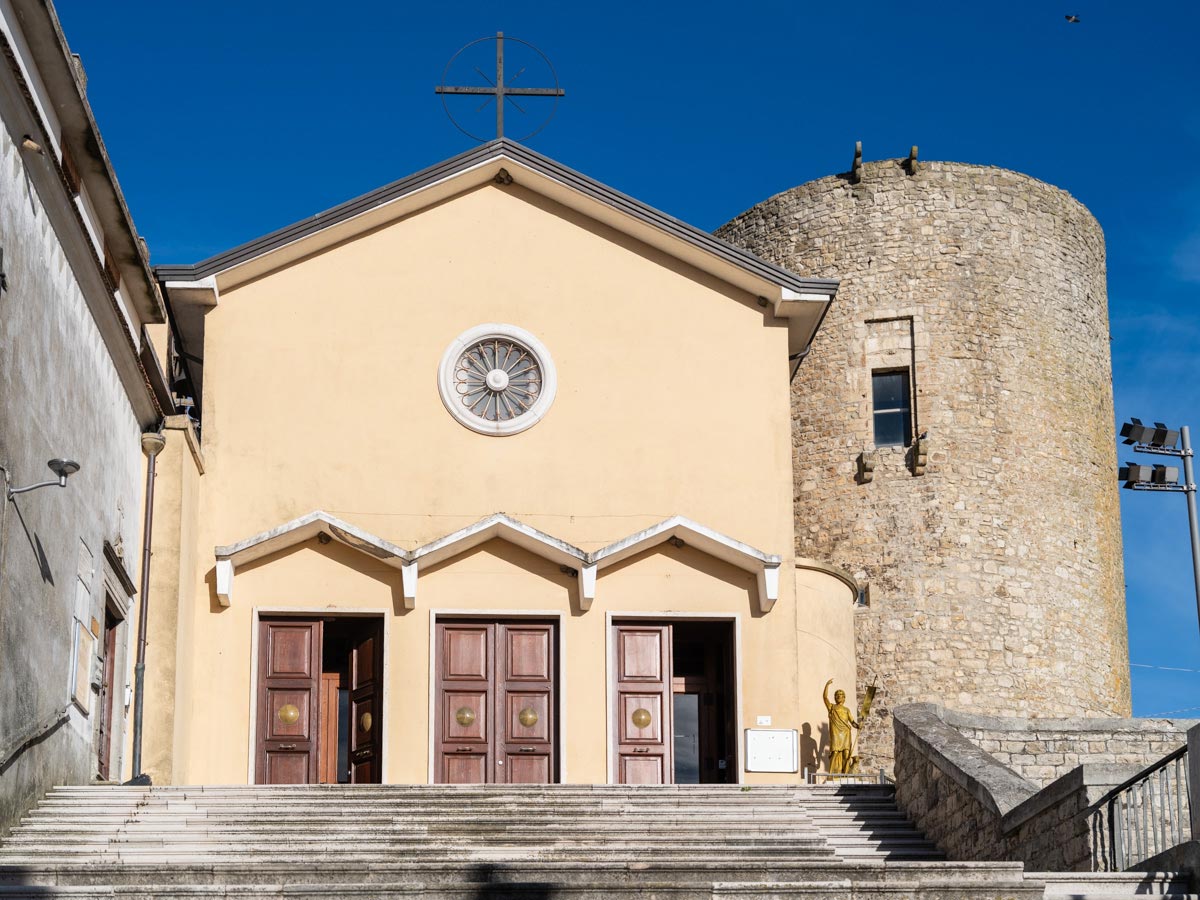
Church of San Vito, Celle di San Vito
Tempo di lettura:
The mountain landscape of the Daunian Apennines is dotted with small stone landmarks that, for centuries, offered shelter and spiritual comfort to travelers, shepherds, and pilgrims. Among these historical testimonies…
The mountain landscape of the Daunian Apennines is dotted with small stone landmarks that, for centuries, offered shelter and spiritual comfort to travelers, shepherds, and pilgrims. Among these historical testimonies stands the Church of San Vito in Celle di San Vito, a rural sacred building that embodies the deep memory and resilience of the local community. Located in a picturesque setting near the municipal boundaries, this church is a point of reference for anyone wishing to explore the examples of rural sacred architecture in Apulia (Puglia), where rural faith merged with the need to safeguard mountain transit routes.
The church is not simply an isolated monument, but an essential stop along the itineraries dedicated to walking tourism in the Alta Valle del Celone. Those who reach this place experience an atmosphere of silence and contemplation, interrupted only by the sounds of nature, an experience that continues to attract an increasing number of walkers in search of well-preserved historical destinations away from crowded tourist routes.
A Small Village with Authentic Charm
The modern village welcomes visitors by revealing the true essence of the authentic villages of Capitanata, where genuine hospitality is combined with the careful preservation of medieval roots. For those planning a journey through the inland area of the Province of Foggia and looking for ideas on what to see in Celle di San Vito, a visit to the church and the village streets is highly recommended.
The quiet alleyways and the light-colored stone houses introduce visitors to a slower, more mindful pace of travel. Looking at the map of Celle di San Vito’s monuments, it quickly becomes clear how closely the municipality’s architectural heritage is connected to the surrounding landscape, offering a clear picture of how mountain communities have organized their living spaces over the centuries.
Historical Connections and Territorial Disputes in the Valley
The history of this sacred building is marked by a complex web of administrative and religious relationships that involved the entire valley. Originally, the management of the church was the subject of an unusual division: although the hamlet of San Vito officially belonged to the municipality of Faeto, the church of the same name was historically administered by the clergy of Castelluccio Valmaggiore. This administrative fragmentation was resolved only from 1890 onward, when the municipality of Celle di San Vito finally obtained full authority over both the building and the religious celebrations associated with it.
The church is inseparably linked to the memory of Daunian religious traditions and folklore. Until the mid-20th century, it was the focal point of the annual Feast of Saint Vitus, a celebration deeply cherished by the local community. However, because of social changes and the depopulation of Italy’s inland areas, the celebration was officially discontinued in 1955, marking a turning point in the community life of the area.
The Rebirth of the Church and the Enhancement of the Territory
Despite the interruption of the traditional celebrations, the emotional bond between the inhabitants and their patron saint has never faded. In recent years, the Municipality of Celle di San Vito has actively promoted a restoration and reconstruction project for the church, with the work completed around 2015. Today, the building has been fully restored, returning its original stone silhouette to the mountain landscape.
The presence of the restored church makes it possible to include this stop within broader itineraries linking Faeto, Celle di San Vito, and Castelluccio Valmaggiore, creating a hiking and cultural circuit of considerable value. The monument has thus become one of the most evocative historic churches of the Monti Dauni, a place where the history of medieval boundary disputes gives way to the natural beauty of the Daunian Sub-Apennines, inviting travelers to continue exploring the valley and discover both its tangible and intangible heritage.
Discover the Alta Valle del Celone
The restoration of the Church of San Vito is an invitation to discover the entire cultural landscape of the hilltop villages of Capitanata.
Discover the other landmarks of Castelluccio Valmaggiore and the Alta Valle del Celone. Continue exploring the portal to access guides to nature trails, learn more about the mountain food and wine traditions, and discover the calendar of historic celebrations that continue to bring life to our communities in the Apulian Apennines.
AT GLANCE
Where
Celle San Vito
Suitable for
All
SHARE


PODCAST
L’Alta Valle del Celone
Ten episodes exploring Celle di San Vito, Faeto and Castelluccio Valmaggiore through the voices of those who live in these places every day.
An audio journey through stories, memories, traditions, landscapes and flavours, told by the people of the three towns. The podcast guides visitors in discovering the authentic soul of the Alta Valle del Celone: a land of forests, villages and vibrant communities, where every voice preserves a piece of its identity.
Recommended experiences

The Highest Municipality in Puglia
The geography of the inland Foggia area holds remarkable …

Fresh Pasta Festival in Castelluccio Valmaggiore
Summer in the small villages of the Puglian (Apulian) Apennines …
Fresh Pasta in Celle di San Vito
There is an inseparable bond between the table of a small …
Keep exploring
The Highest Municipality in Puglia
The geography of the inland Foggia area holds remarkable …
Fresh Pasta Festival in Castelluccio Valmaggiore
Summer in the small villages of the Puglian (Apulian) Apennines …
Fresh Pasta in Celle di San Vito
There is an inseparable bond between the table of a small …

Ppìzze do le ccìcule: The Ciccioli Pizza of the Franco-Provençal Communities
There is a dough that carries the flavor of January. Of …