The Bonfire of Saint Joseph in Castelluccio Valmaggiore
Tempo di lettura:
Every year, on March 19, the darkness of the Alta Valle del Celone is broken. The flames rise high, the wood crackles, and for a few hours the village of…
Every year, on March 19, the darkness of the Alta Valle del Celone is broken. The flames rise high, the wood crackles, and for a few hours the village of Castelluccio Valmaggiore becomes exactly what it has always been: a place where memory is alive, preserved by those who have never stopped passing it on.
The Bonfire of Saint Joseph is a ritual that has been repeated uninterrupted for around four hundred years, rooted in the land with the same resilience as the chestnut trees growing on the slopes of the Dauno Sub-Apennines. Anyone experiencing it for the first time immediately realizes that it is not a spectacle. It is an ancient language that the village still speaks fluently.
A Village on the Ridge, Between Stone and Memory
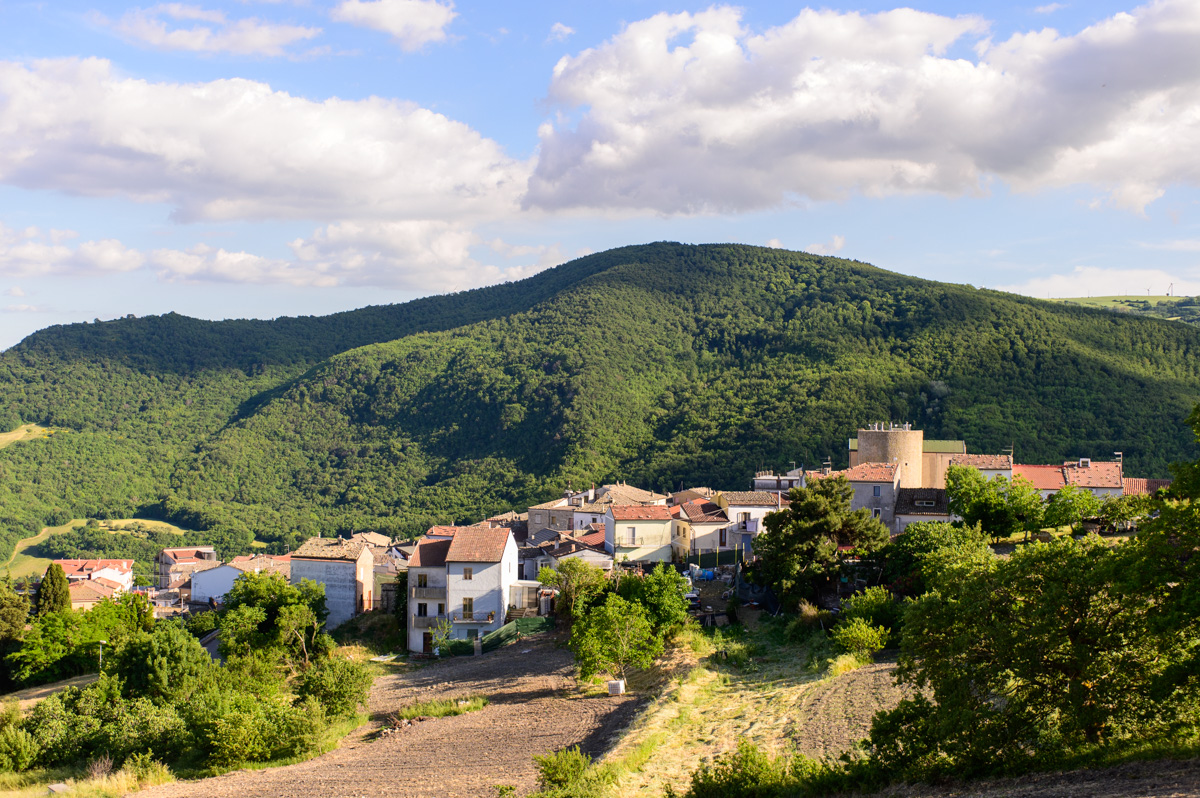
Castelluccio Valmaggiore stands at over 700 meters above sea level, on a ridge overlooking valleys, woodlands, and the rolling profile of the Monti Dauni (Dauni Mountains). Its historic center preserves the compact layout of the medieval villages of the Alta Valle del Celone: narrow alleyways, limestone churches, and houses built closely together as if sheltering one another from the wind.
It is one of the villages of inland Puglia (Apulia) that has never abandoned its identity. Every year in March, that identity takes the form of fire.
The Origins: Carpenters, Devotion, and a Propitiatory Fire
The history of the Bonfire of Saint Joseph in Castelluccio Valmaggiore dates back to the 17th century, when the village was home to numerous local craftsmen. Among them, carpenters were one of the most active trades. Like many artisan guilds of the time, they felt the need for a patron saint to watch over their work and prosperity.
They chose Saint Joseph, the carpenter by excellence according to Christian tradition. They entrusted themselves to him so that commissions would continue, work would never cease, and the year would bring abundance. The bonfires lit in his honor were a propitiatory act in the most practical sense: the flames were meant to “burn away” everything negative: hardship, illness, poor harvests and make way for renewal.
This tradition was closely tied to the agricultural calendar and the cycles of nature. March 19 falls just a few days before the spring equinox, when the earth begins to warm again and work in the fields resumes. The fire also served as a blessing for the coming season, a way of asking nature to be generous.
The women of the village played a specific role in this popular ritual. They gathered around the bonfire, sang devotional hymns, and recited prayers together as an act of collective thanksgiving. At the end of the evening, some would take home a few glowing embers, not only to warm their homes, but also as a symbolic gesture, bringing with them a part of the sacred fire and the protection of Saint Joseph.
A Tradition Rooted in the Rural History of Southern Italy
The rural history of Southern Italy is filled with rituals connected to fire, the land, and patron saints. Yet the Bonfire of Saint Joseph in Castelluccio Valmaggiore has a distinctive character: it originated from an artisan guild, from a direct relationship between work, devotion, and community. It is the enduring trace of a social and productive system that shaped this village for centuries.
Visiting Castelluccio Valmaggiore during the Feast of Saint Joseph means immersing yourself in this living layer of history. The fire that burns on the evening of March 19 is the same in gesture and meaning as the one that burned four hundred years ago. The context has changed, but the intention has not.
When to Visit: What to Do in March in Inland Puglia
Those looking for things to do in Puglia in March, away from the coast and far from the best-known destinations, will find something different in the villages of the Dauno Sub-Apennines. Spring arrives here a few weeks later than along the Adriatic coast: the woods have not yet lost their winter silence, the pastures begin to regain their color, and the air still carries the crispness of the changing seasons.
At this time of year, Castelluccio Valmaggiore comes alive with genuine vitality. Around the bonfire, traditional flavors are always present: meat grilled over the embers and blessed panellini distributed according to a custom handed down through generations. It is a natural gateway to the food and wine heritage of the Monti Dauni, made up of simple, flavorful products and recipes that do not seek the spotlight.
For those walking the routes of Puglia or planning a slow itinerary through the historic villages of the Dauno Sub-Apennines, the evening of March 19 can become an unforgettable experience: a bonfire blazing in a stone square, the songs of the women, and the glowing embers crackling beneath the stars.
Discover Castelluccio Valmaggiore and the Alta Valle del Celone
Discover the other places of Castelluccio Valmaggiore and the Alta Valle del Celone: traditions, culture, nature itineraries, food and wine, and the events that bring this village in the Monti Dauni to life throughout the year.
AT GLANCE
Where
Castelluccio Valmaggiore
Type
Suitable for
All
Interests
SHARE


PODCAST
L’Alta Valle del Celone
Ten episodes exploring Celle di San Vito, Faeto and Castelluccio Valmaggiore through the voices of those who live in these places every day.
An audio journey through stories, memories, traditions, landscapes and flavours, told by the people of the three towns. The podcast guides visitors in discovering the authentic soul of the Alta Valle del Celone: a land of forests, villages and vibrant communities, where every voice preserves a piece of its identity.
Recommended experiences

The Highest Municipality in Puglia
The geography of the inland Foggia area holds remarkable …

Fresh Pasta Festival in Castelluccio Valmaggiore
Summer in the small villages of the Puglian (Apulian) Apennines …
Fresh Pasta in Celle di San Vito
There is an inseparable bond between the table of a small …
Keep exploring
The Highest Municipality in Puglia
The geography of the inland Foggia area holds remarkable …
Fresh Pasta Festival in Castelluccio Valmaggiore
Summer in the small villages of the Puglian (Apulian) Apennines …
Fresh Pasta in Celle di San Vito
There is an inseparable bond between the table of a small …

Ppìzze do le ccìcule: The Ciccioli Pizza of the Franco-Provençal Communities
There is a dough that carries the flavor of January. Of …