Pork fry and bread fried in the pan juices
Reading time:
Lu Suffritte and Lu Panùnte: Faeto’s pork fry. Some dishes are not born in the kitchen. They are born of a necessary gesture, a collective ritual, the old logic of…
Lu Suffritte and Lu Panùnte: Faeto’s pork fry.
Some dishes are not born in the kitchen. They are born of a necessary gesture, a collective ritual, the old logic of wasting nothing. Faeto’s pork fry (soffritto di maiale) is one of them.
We are in the Alta Valle del Celone, among the hills of the Daunian Subapennines, in a corner of Puglia that looks nothing like the coast. Here the landscape is made of woods and pastures, roads climbing among beeches and oaks, and stone villages clinging to the ridges as if afraid to slide down into the valley.
Faeto: a village, a language, an identity
Together with Celle di San Vito, Faeto is one of only two communities in southern Italy where Franco-Provençal survives, a medieval Romance language probably brought here by Angevin-era settlers between the 13th and 14th centuries. The language has remained: in the names of things, in ritual formulas, in the very names of the dishes.
Lu suffrìtte and lu panùnte are the original words, the ones grandparents used when the pig was slaughtered and the kitchen filled with steam and smoke. Visiting Faeto also means this: listening to sounds that belong to another linguistic history and sitting down at the table within a tradition that has crossed the centuries almost intact.
The recipe: what goes into the pan
In Faeto, making the pork fry followed, and partly still follows, the simple rules of peasant cooking in the inland villages of Puglia: use what you have, cook it directly, eat it straight away.
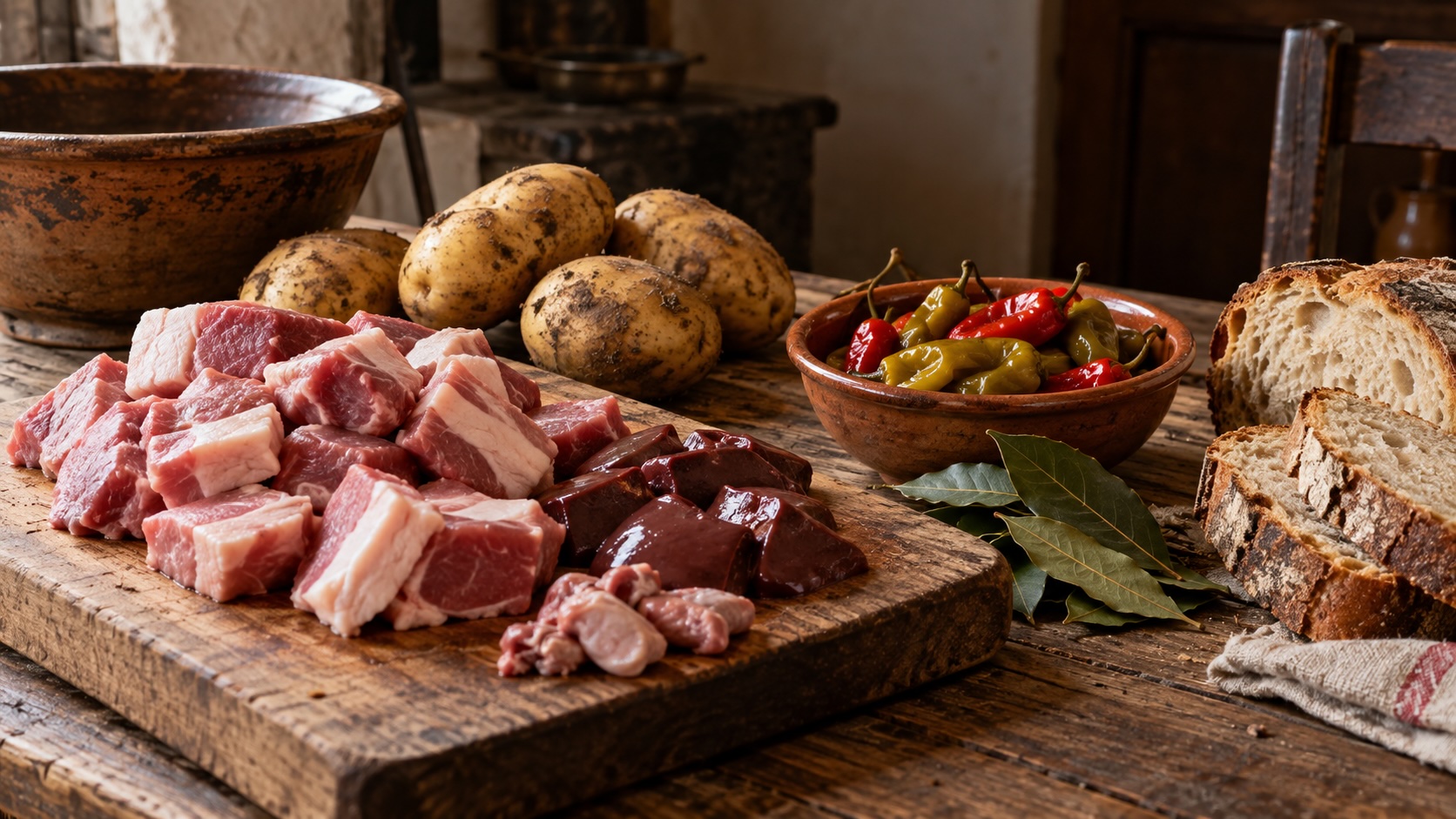
On the day the pig was slaughtered, the family gathered for lunch. The liver and lungs were cut into small pieces, and potatoes and pickled peppers, a few bay leaves and salt to taste were added. Everything went into the pan with the pig’s own fat, no oil, no butter, and was fried until the aromas filled the kitchen and the pieces took on colour.
It was the first meal of slaughter day. A quick, hearty meal to warm those who had been working in the cold since dawn.
Lu Panùnte: the bread that soaks up the pan
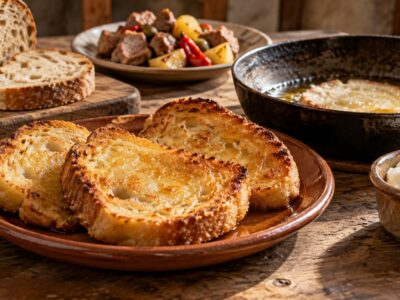
When the fry was finished, the hot fat flavoured by everything that had cooked in it was left at the bottom of the pan. And that is where lu panùnte, Faeto’s pane unto (greased bread), was born.
Slices of rustic bread were fried in the leftover fat and eaten hot, still sizzling. Nothing more, nothing less. A gesture that turned the remains of one dish into a second moment of the meal, a tasty, rich finale that today would be called nose-to-tail cooking: in Faeto it had been practised for centuries.
This sequence, suffrìtte first, panùnte after, is the most authentic form of what we mean by peasant cooking: the dish that is not complete without its sequel, the pan never left half used.
The black pig and the local supply chain
Faeto’s pork fry cannot be understood without the pig that comes before it. In the Monti Dauni, the tradition of free-range rearing has for generations produced animals with rich, tasty fat, the basis of a chain of typical products including ham, lard, sausages and crackling.
Slaughtering the pig was not a private moment: it was an event involving the whole family, often the neighbours and the community. The fry was the way that ritual ended at the table, with a meal that included everyone and celebrated, concretely and without rhetoric, the toil and foresight of the past year.
This tradition can still be found today at the Faeto Pork Festival, the Féte de lu Cajúnne, a winter event that draws visitors from all over Puglia and makes the village a reference point for those seeking authentic food and wine in the Alta Valle del Celone.
What to eat in Faeto: between history and flavour
For those planning a food itinerary in the Monti Dauni, the pork fry is one of the most representative items on Faeto’s table. The village offers a food profile consistent with its identity: inland, seasonal dishes tied to local produce and to the Franco-Provençal tradition that has also shaped its material culture.
What people eat in Faeto tells who the people of Faeto have been: mountain people, used to a harsh climate and a self-sufficient rural economy. Food is the most direct form in which that history has been preserved.
Discover Faeto and the Alta Valle del Celone
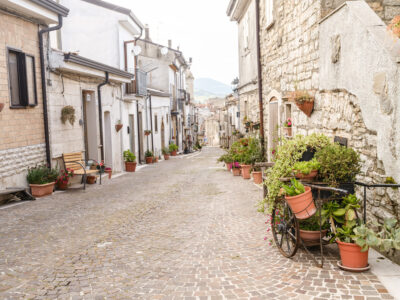
Faeto holds a medieval history, a stone historic centre, trails through the woods of the Daunian Subapennines and an intangible culture that, in Puglia, it shares only with Celle di San Vito.
Explore more places, traditions, itineraries and heritage of the Alta Valle del Celone: discover Faeto together with Celle di San Vito and Castelluccio Valmaggiore, walk through the woods of the territory, learn about local traditions and let yourself be guided by one of the most original cultural identities of inland Puglia.
AT A GLANCE
Where
Faeto
Type
Suitable for
Everyone
Interests
SHARE


PODCAST
L’Alta Valle del Celone
Ten episodes exploring Celle di San Vito, Faeto and Castelluccio Valmaggiore through the voices of those who live in these places every day.
An audio journey through stories, memories, traditions, landscapes and flavours, told by the people of the three towns. The podcast guides visitors in discovering the authentic soul of the Alta Valle del Celone: a land of forests, villages and vibrant communities, where every voice preserves a piece of its identity.
Recommended experiences
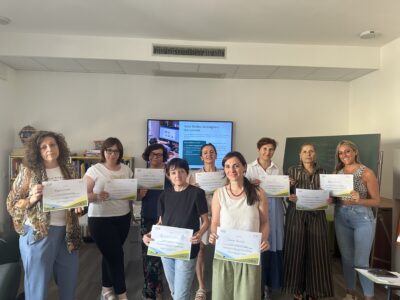
Alta Valle del Celone: a training day on communicating the destination
A meeting in Castelluccio Valmaggiore on the future of tourism …
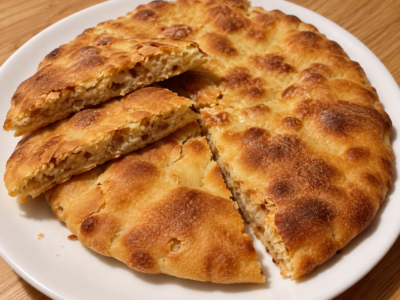
Pizza with pork crackling
La pizze dò le cíccule: the crackling pizza of the …
Keep exploring

The Pagliaro – Lu Pagljare
The Pagliaro Exploring the mountain landscapes of Puglia brings …
Festa del Vicino (Neighbours’ Festival)
Festa del Vicino in Celle di San Vito The Festa del Vicino …

The waterfalls of the Freddo stream
Waterfalls of the Freddo stream in Castelluccio Valmaggiore: …