Celone Valley Museum: Where the History of the Territory Takes Shape
Tempo di lettura:
Behind the historic center of Castelluccio Valmaggiore, sheltered by the village’s ancient walls, the Celone Valley Museum tells the story of how this corner of inland Apulia has been inhabited,…
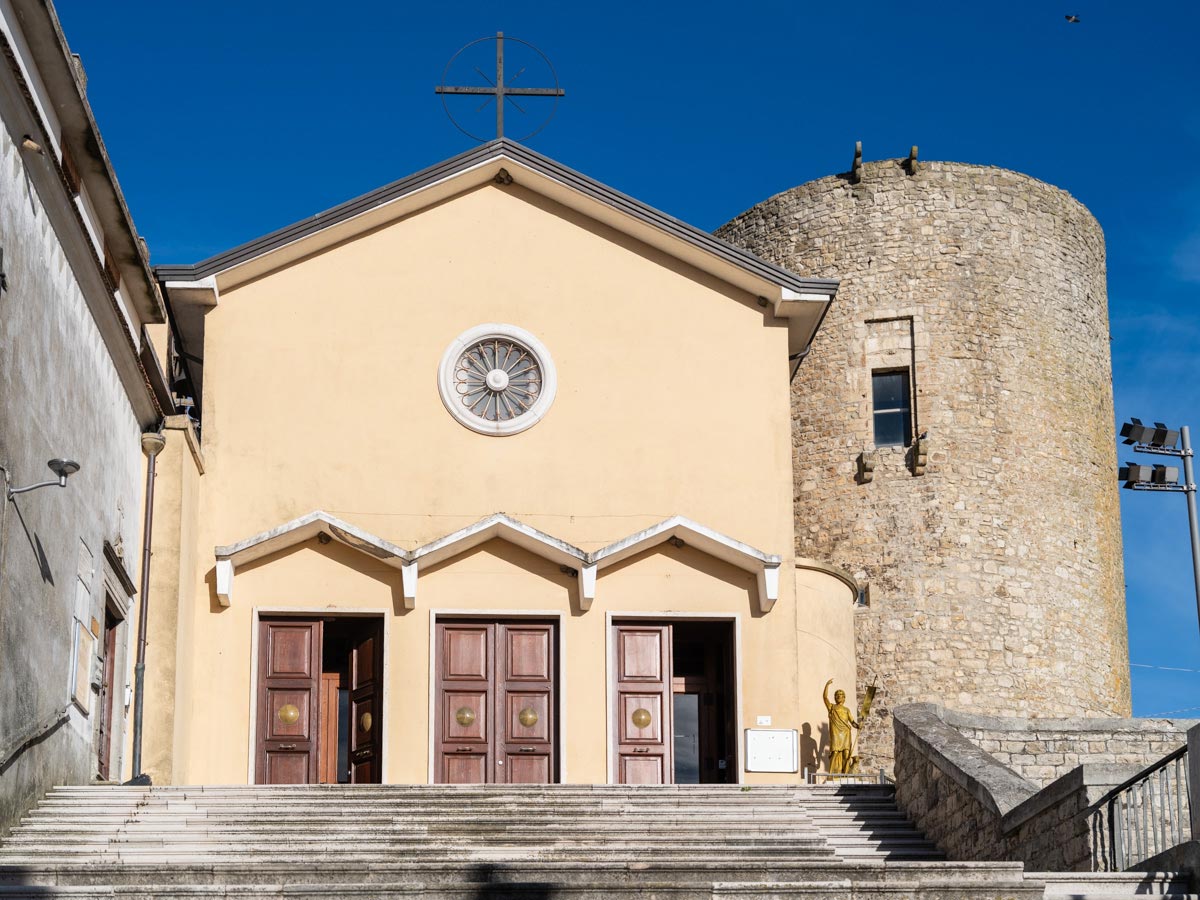
Behind the historic center of Castelluccio Valmaggiore, sheltered by the village’s ancient walls, the Celone Valley Museum tells the story of how this corner of inland Apulia has been inhabited, transformed, and lived in over the centuries. It is a narrative journey through archaeology, nature, and collective memory, built around a territory with a remarkable story to tell.
A Village on the Edge of the Daunian Apennines, Between History and Landscape
Castelluccio Valmaggiore is located in the Alta Valle del Celone, in the heart of the Monti Dauni (Dauni Mountains), just a few kilometers from the border between Apulia and Campania. It is one of those villages that visitors do not pass through by chance; they arrive with purpose, driven by curiosity for the inland areas of Apulia (Puglia) that remain beyond the usual coastal tourist routes. Its stone houses, the irregular outline of its historic center, and the narrow alleyways climbing toward the tower all speak of a community that has successfully rooted itself in a landscape that is both challenging and generous.
The Celone Valley Museum System: An Idea Born from Beneath the Ground
Everything began in the summer of 2011, during excavation work for the construction of a natural gas pipeline. The works uncovered artifacts of extraordinary historical importance, giving rise to the idea of creating something far more than a traditional museum. The goal became the development of an integrated museum system capable of bringing together archaeological, historical-architectural, and natural heritage into a single narrative, without the artificial boundaries that so often separate individual fields of knowledge.
The Celone Valley Museum System was inaugurated on August 3, 2018. Its philosophy is straightforward: from the discovery of a single artifact, it is possible to reconstruct the dynamics of an entire territory, its natural resources, the peoples who inhabited it, and the choices those resources made necessary or possible. This approach modernizes the traditional concept of a static museum exhibition, transforming it into a living experience.
What to See: Artifacts, Reconstructions, and Accessibility
Inside the museum, visitors encounter artifacts, three-dimensional models, display cases, and reconstructions that guide them through the history of the territory over time.
The archaeological section preserves materials recovered from local excavations, including artifacts associated with the Daunian civilization, while the natural history section explores the physical landscape of the Celone Valley, its wildlife, seasonal cycles, and the relationship between the environment and human settlement.
Alongside these is an educational section equipped with modern facilities, designed to introduce younger generations to the local history.
One detail deserves special attention: the descriptive panels accompanying the artifacts are also available in Braille, making the museum accessible to blind visitors. It is a meaningful act of inclusion that reflects the care with which the entire project was conceived.
The Byzantine Tower and the Meta Museum
The museum system extends beyond the walls of the main museum. The Byzantine Tower of Castelluccio Valmaggiore houses the Meta Museum, an exhibition space dedicated to artifacts connected with the Battle of Cannae, one of the most famous battles of ancient history, fought in 216 BC not far from Castelluccio. Visiting the tower means quite literally ascending into the history of the region, viewing the landscape from above, and understanding why this location was already strategically important during the Middle Ages.
The system is completed by the Naturalistic Observatory and the Park House, facilities that broaden the visitor experience toward the environmental dimension and extend the project to the municipalities throughout the entire Celone Valley area. The project’s stated goal is to create a shared model of territorial enhancement: only by coordinating development efforts, according to the project’s vision, can a sustainable future for this valley be ensured.
A Museum That Opens the Door to a Larger Journey
The Celone Valley Museum is a starting point rather than a destination. Visitors soon discover that the area surrounding Castelluccio Valmaggiore is rich in itineraries through the medieval villages of the Daunian Apennines, nature trails, architectural heritage, and deeply rooted food and wine traditions. In this sense, the museum provides the key to understanding everything else.
For those arriving from Foggia or the Apulian coast, a visit to the museum naturally becomes part of a broader itinerary that also includes Celle di San Vito and Faeto, villages that share with Castelluccio the same borderland identity and the same connection to a landscape that remains, to a large extent, waiting to be discovered.
Discover the other places of Castelluccio Valmaggiore and the Alta Valle del Celone: historic villages, nature trails, traditions, events, and the flavors of an authentic territory in the heart of inland Apulia.
AT GLANCE
Where
Castelluccio Valmaggiore – Faeto – Celle San Vito
Suitable for
All
SHARE


PODCAST
L’Alta Valle del Celone
Ten episodes exploring Celle di San Vito, Faeto and Castelluccio Valmaggiore through the voices of those who live in these places every day.
An audio journey through stories, memories, traditions, landscapes and flavours, told by the people of the three towns. The podcast guides visitors in discovering the authentic soul of the Alta Valle del Celone: a land of forests, villages and vibrant communities, where every voice preserves a piece of its identity.
Recommended experiences
The Highest Municipality in Puglia
The geography of the inland Foggia area holds remarkable …

Fresh Pasta Festival in Castelluccio Valmaggiore
Summer in the small villages of the Puglian (Apulian) Apennines …
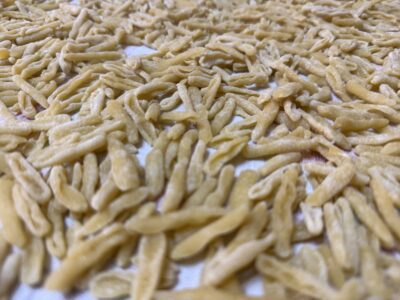
Fresh Pasta in Celle di San Vito
There is an inseparable bond between the table of a small …
Keep exploring
The Highest Municipality in Puglia
The geography of the inland Foggia area holds remarkable …
Fresh Pasta Festival in Castelluccio Valmaggiore
Summer in the small villages of the Puglian (Apulian) Apennines …
Fresh Pasta in Celle di San Vito
There is an inseparable bond between the table of a small …

Ppìzze do le ccìcule: The Ciccioli Pizza of the Franco-Provençal Communities
There is a dough that carries the flavor of January. Of …