Via Traiana (Castelluccio Valmaggiore)
Reading time:
The Via Traiana at Castelluccio Valmaggiore: where history is walked on foot. An ancient Roman road still crosses the territory The Via Traiana, one of the great roads of the…
The Via Traiana at Castelluccio Valmaggiore: where history is walked on foot.
An ancient Roman road still crosses the territory
The Via Traiana, one of the great roads of the Roman Empire, also crossed the territory of Castelluccio Valmaggiore, in the Alta Valle del Celone. Of that ancient route no immediately recognisable physical remains survive, at least on this stretch. Yet the line that linked Benevento to Brindisi still finds a match in the historic roads of the area and, in particular, in the present route of the Via Francigena del Sud.
The Roman road crossed the municipal territory, following a line that connected the Apennine hinterland with Aecae, today’s Troia. In this sector the modern route of the Francigena follows the direction of the ancient road, without necessarily coinciding with every original segment.
The relationship between Castelluccio Valmaggiore and the Via Traiana is therefore best understood by looking at the position of the village, the shape of the valley and the links that, across different eras, have continued to connect the Monti Dauni with the Tavoliere.
The emperor’s road: history and route of the Via Traiana
The Via Traiana was built between 108 and 110 AD at the wish of Emperor Trajan, taking up and improving a route already used in the Republican period. Conceived as an alternative to the older Via Appia, it linked Beneventum, today’s Benevento, with Brundisium, Brindisi, crossing the Apennines and the plains of Puglia.
The new road eased the movement of people, goods and armies between the cities and farmland of southern Italy. It helped strengthen the links between Rome, Daunia and the Adriatic ports, bringing even the inland areas into a communications network of great economic and strategic importance.
The stretch crossing the territory of Castelluccio Valmaggiore belonged to the line which, after crossing the Apennine hills and the area of the San Vito pass, descended towards Aecae, today’s Troia. From there the road continued towards Herdonia and the other cities of ancient Apulia.
Over the centuries the old routes continued to be used, adapted and transformed. Country roads, transhumance routes and pilgrim ways developed within a road network in which some of the great Roman routes long kept their importance.
Castelluccio Valmaggiore: a village that looks far
A village overlooking the valley
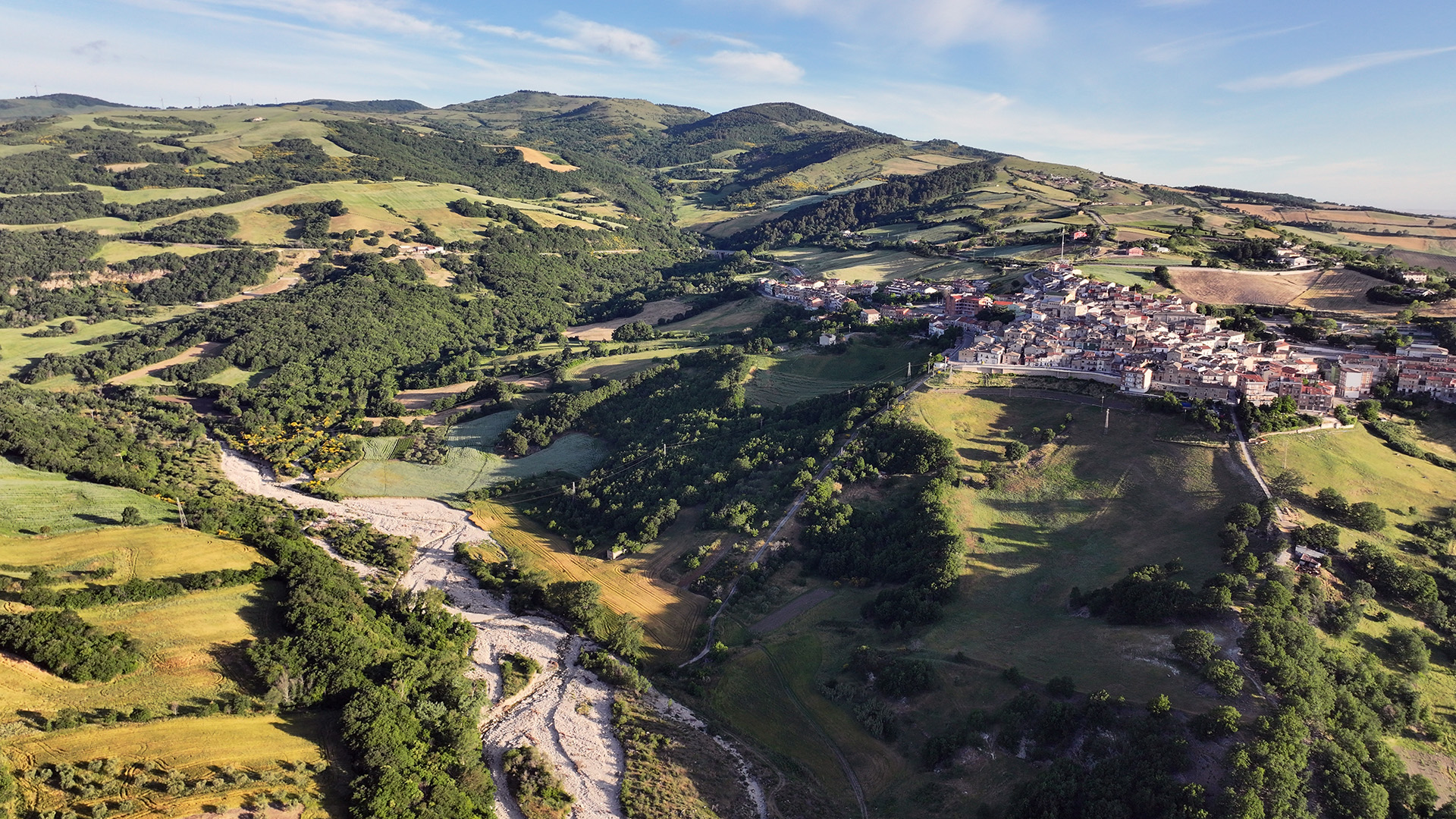
Castelluccio Valmaggiore is a medieval village on the heights overlooking the Celone valley, at over 600 metres above sea level. From the historic centre the eye reaches the hills and countryside of the Monti Dauni, following a series of ridges and valleys that for centuries were important links between the mountains and the Tavoliere.
The village’s position also explains part of its history. In the Byzantine period, the fortified core of Castelluccio was a strategic lookout over the line of the Via Traiana, helping to control the surrounding territory and the routes towards Troia.
The Byzantine Tower, still one of the symbols of the village, shows the importance this place gained in the medieval defensive system. The relationship with the Roman road is thus not only about its passage through the municipal territory but also about the strategic position of the village in relation to the valley’s routes.
Visiting Castelluccio Valmaggiore also means looking at the landscape from this perspective, trying to understand why, throughout history, certain places became reference points for controlling and crossing the territory.
Walking the Via Traiana today: slow travel between history and nature
A historic route through the Monti Dauni
In the Alta Valle del Celone, the relationship between the ancient Roman roads and today’s walking routes finds one of its expressions in the Via Francigena del Sud, which follows some of the historic lines used to link the Apennines with Puglia.
The modern route of the Francigena also crosses the territory of Castelluccio Valmaggiore, in the sector between Faeto, Celle di San Vito and Troia. In this part of the Monti Dauni the route follows a line that historically goes back to the Via Traiana, while adapting to today’s roads.
Those walking these routes today should not expect long stretches of Roman paving or monumental remains of the ancient road. Recognising its passage comes rather from the historical reconstruction of the routes and from observing the territory: the passes, the valleys, the links between villages and the country roads still crossing the fields.
The walk also lets you appreciate the natural side of this part of the Monti Dauni. Cultivated fields, woods, ridges and small rural settlements accompany the route, offering a view of the Apulian Apennine landscape far from the most visited destinations.
The Via Traiana thus becomes a historical reference point for those crossing the Alta Valle del Celone slowly. Even without immediately visible archaeological remains, knowing the route of the ancient road lets you look more knowingly at places that might otherwise seem like simple country lanes.
A heritage to experience on foot
The passage of the Via Traiana through the territory of Castelluccio Valmaggiore is an important testimony to the history of communications between the Apennines and Puglia. The ancient road helped link territories that, though geographically close, were separated by hills, valleys and mountain passes.
Over time these roads were travelled by merchants, soldiers, travellers and later by pilgrims heading for the main places of worship in southern Italy and the Adriatic ports.
Today the Via Francigena del Sud offers the chance to rediscover part of this history on foot. The interest of the route lies not only in the monuments along the way but also in the relationship between the ancient lines of communication and the landscape around them.
For visitors to Castelluccio Valmaggiore, knowing about the Via Traiana is therefore a chance to delve into the history of the village and understand the role the Alta Valle del Celone played in the links between the mountains, the Tavoliere and the rest of Puglia.
Discover Castelluccio Valmaggiore and the Alta Valle del Celone
The Via Traiana is one of the testimonies to the long history of the territory of Castelluccio Valmaggiore, together with the medieval architecture, folk traditions and landscapes that characterise the Alta Valle del Celone.
Keep exploring our website to discover the places to visit, the nature trails, the feasts and traditions of Castelluccio Valmaggiore, Celle di San Vito and Faeto. From the Via Francigena del Sud to the Sentiero Frassati, from the village lanes to the woods of the Monti Dauni, the territory offers many opportunities to delve into its history and discover the communities who live there.
AT A GLANCE
Where
Castelluccio Valmaggiore – Celle di San Vito
Suitable for
Everyone
Interests
SHARE


PODCAST
L’Alta Valle del Celone
Ten episodes exploring Celle di San Vito, Faeto and Castelluccio Valmaggiore through the voices of those who live in these places every day.
An audio journey through stories, memories, traditions, landscapes and flavours, told by the people of the three towns. The podcast guides visitors in discovering the authentic soul of the Alta Valle del Celone: a land of forests, villages and vibrant communities, where every voice preserves a piece of its identity.
Recommended experiences

Alta Valle del Celone: a training day on communicating the destination
A meeting in Castelluccio Valmaggiore on the future of tourism …
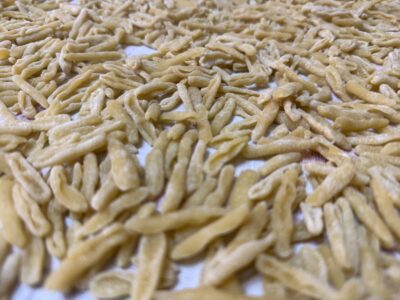
Handmade Pasta Festival
Handmade Pasta Festival in Castelluccio Valmaggiore. Summer in …

Village-style bread balls
Bread balls in Castelluccio Valmaggiore. The ingenuity of …
Keep exploring
The Cross of the Provençals in Celle di San Vito
The Cross of the Provençals in Celle di San Vito Among the …
“Féte de lu Cajúnne”, the pork festival
The first Sunday of February in Faeto: when the cold brings a …
Difesa Vadicola area
Difesa Vadicola: where the woods meet cultivated land. The …
Faeto lamb stew
Lu spezzatiélle: Faeto’s Easter Monday dish. There is one day of …