Via Francigena in Faeto
Tempo di lettura:
Walking along Europe’s ancient routes means immersing yourself in a dimension where history blends with earth, mud, and leaves. Along the Puglian (Apulian) section of the pilgrimage route, the mountain…
Walking along Europe’s ancient routes means immersing yourself in a dimension where history blends with earth, mud, and leaves. Along the Puglian (Apulian) section of the pilgrimage route, the mountain variant of the Via Francigena in Faeto offers one of the most evocative stretches of the entire southern itinerary. This ancient trail crosses the Apennine mountain pass, linking the Tavoliere with the peaks of Daunia, guiding travelers through a landscape dominated by vast beech and oak forests, far removed from the coastal stereotypes associated with Puglia.
The inclusion of this variant within the Via Francigena del Sud and its Foggia stages reflects the historical and geographical need for safe passage dating back to the Middle Ages. For modern pilgrims and hikers, walking this section is not only a physical challenge but also a transcultural journey that combines spiritual exploration with the discovery of local intangible heritage, preserved within a Franco-Provençal linguistic enclave that has endured for more than seven centuries.
The charm of a mountain village among forests and stone rooftops
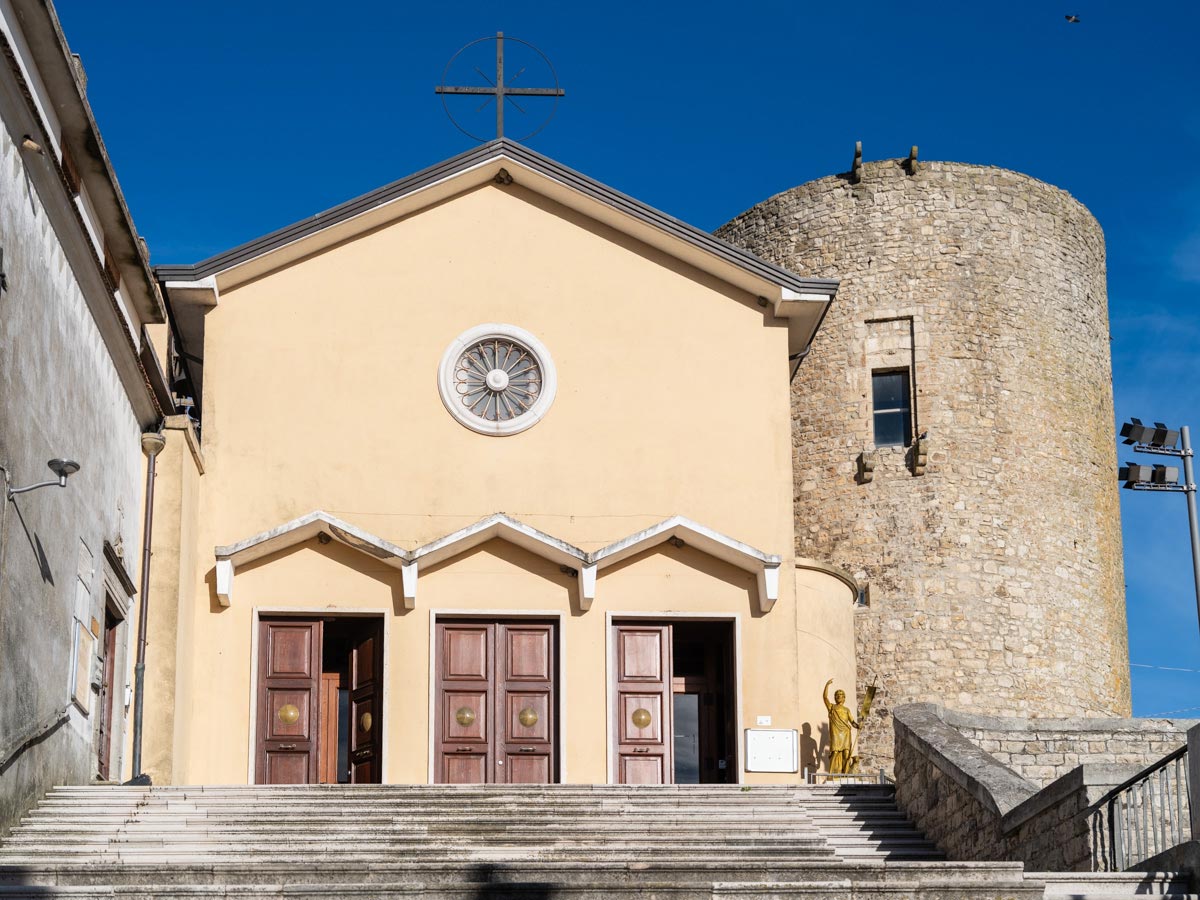
Beyond the mountain ridges, the village of Faeto appears to walkers like a stone nest clinging to the rock at an altitude of 866 meters. The village, which holds the distinction of being the highest municipality in the region, preserves an intact medieval urban layout of narrow streets, arches, and small squares that suddenly open onto sweeping valley views.
The ideal entrance for those following the historic route is the village’s ancient northern gateway, a monumental passage formed by two round-arched portals built from finely worked local stone. Crossing this threshold, visitors find themselves at the beginning of the characteristic “Via dei Provenzali,” the main street leading directly into the heart of the community and introducing them to an atmosphere from another era, where silence is interrupted only by the sounds of the mountains and the melodic speech of the local inhabitants.
A journey immersed in the natural heritage of the Dauno Sub-Apennines
The pilgrimage experience in this area is deeply shaped by the presence of lush, protected nature. Those planning the hike should carefully consult the trail map of Bosco di Faeto, a protected area of exceptional natural value where the Via Francigena intersects with the old charcoal burners’ and shepherds’ paths. The dense beech forests provide shade and coolness even during the summer months, making the walk a restorative experience for both body and mind.
This natural setting makes the area a prime destination for trekking in the Alta Valle del Celone. Walking through these landscapes offers the opportunity to observe the biodiversity characteristic of the natural environment and forests of the Monti Dauni, where springs of pure water continuously emerge along the route, providing refreshment for travelers and feeding the Celone stream that flows through the valley below.
Medieval history, hospitality, and mountain traditions
The route of the Via Francigena is historically linked to the development of the medieval villages along the pilgrimage route. The defensive structures and rural settlements established during the 11th and 12th centuries were built to protect pilgrims traveling to the ports of embarkation for the Holy Land. Today, that original spirit of hospitality lives on through the network of slow hospitality created for contemporary walkers. To secure accommodation or obtain logistical information about pilgrim credentials, it is essential to contact the Faeto Pilgrims’ Hostel through its official channels, a well-equipped stopping point in the heart of the village.
A stay in the village also provides an opportunity to understand the strong connection between the territory and its cuisine. Discovering what to eat in Faeto after the walk is part of the cultural experience: the effort of the trek is rewarded with the region’s mountain specialties, beginning with the renowned Faeto Ham PAT (Traditional Agri-food Product), an air-cured ham matured in the fresh mountain air, accompanied by local legumes and alpine cheeses from the Monti Dauni (Dauni Mountains).
This combination of nature and culture makes the area a benchmark destination for walking tourism and the inland areas of Italy, a growing sector that values the authenticity of small villages. Hikers can plan short slow-travel itineraries from Celle di San Vito to Faeto, walking just a few kilometers along forest trails that connect the only two Franco-Provençal communities in Southern Italy, symbolically uniting the tangible heritage of these two historic villages in a single journey of discovery.
Discover the Alta Valle del Celone
The Faeto section of the Via Francigena is the gateway to a much broader geographical and emotional exploration.
Discover the other places in Castelluccio Valmaggiore and the Alta Valle del Celone: continue exploring the website to browse guides dedicated to the medieval monuments of the valley’s three municipalities, calendars of traditional events, and details about the highland food and wine itineraries of Capitanata.
AT GLANCE
Where
Faeto – Castelluccio Valmaggiore – Celle San Vito
Type
Suitable for
All
Interests
SHARE


PODCAST
L’Alta Valle del Celone
Ten episodes exploring Celle di San Vito, Faeto and Castelluccio Valmaggiore through the voices of those who live in these places every day.
An audio journey through stories, memories, traditions, landscapes and flavours, told by the people of the three towns. The podcast guides visitors in discovering the authentic soul of the Alta Valle del Celone: a land of forests, villages and vibrant communities, where every voice preserves a piece of its identity.
Recommended experiences
The Highest Municipality in Puglia
The geography of the inland Foggia area holds remarkable …

Fresh Pasta Festival in Castelluccio Valmaggiore
Summer in the small villages of the Puglian (Apulian) Apennines …
Fresh Pasta in Celle di San Vito
There is an inseparable bond between the table of a small …
Keep exploring
The Highest Municipality in Puglia
The geography of the inland Foggia area holds remarkable …
Fresh Pasta Festival in Castelluccio Valmaggiore
Summer in the small villages of the Puglian (Apulian) Apennines …
Fresh Pasta in Celle di San Vito
There is an inseparable bond between the table of a small …

Ppìzze do le ccìcule: The Ciccioli Pizza of the Franco-Provençal Communities
There is a dough that carries the flavor of January. Of …