
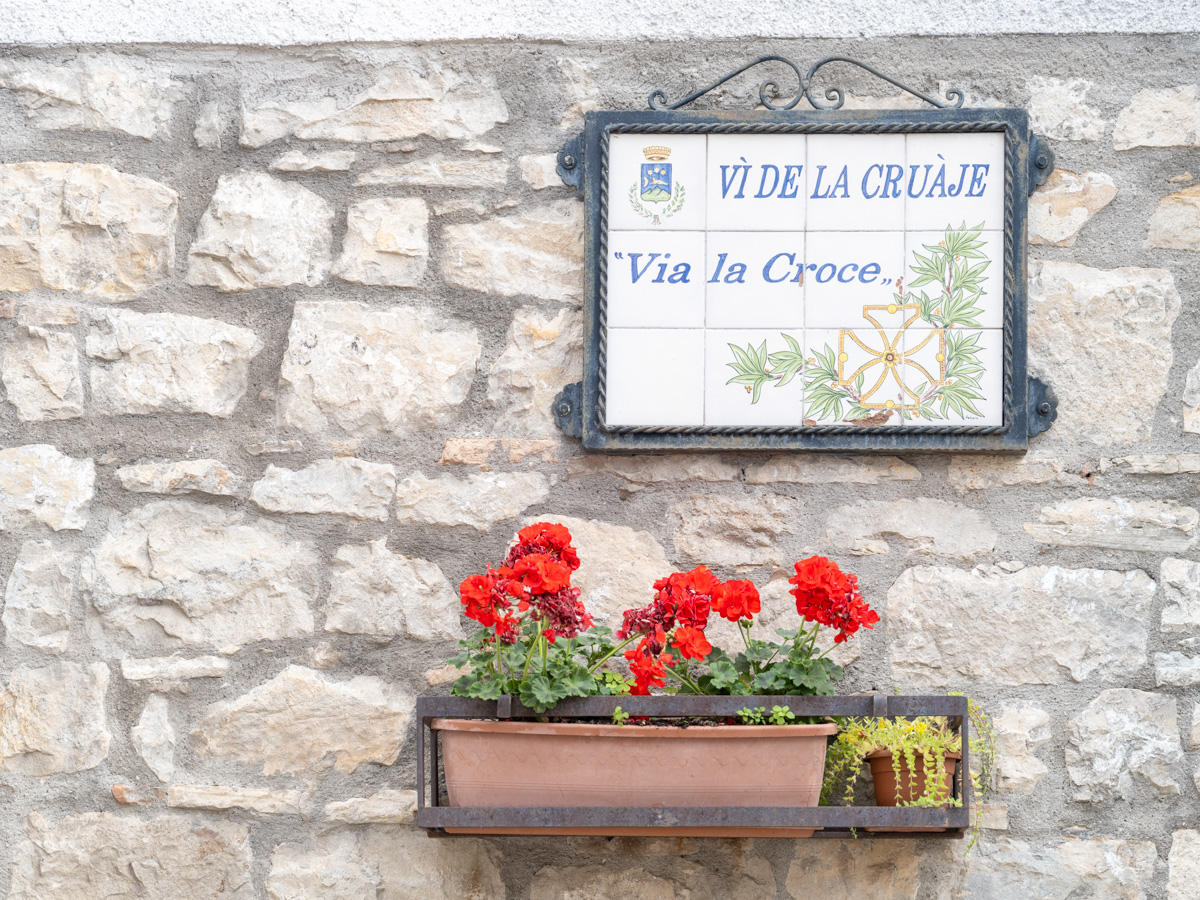
Strolling through the lanes of Celle di San Vito means setting out on a journey that goes beyond the geographical boundaries of the Daunian Subapennines. Walking through the village, visitors’ attention is caught by a detail that makes it unique in the region: the signs naming the streets of Celle di San Vito are bilingual, giving both the Italian name and the original name in Franco-Provençal. This choice is an act of cultural resistance aimed at preserving an intangible heritage of inestimable value.
The presence of signs in a language from beyond the Alps in the heart of Puglia surprises anyone seeking slow cultural travel, turning every corner into a stop on a discovery of Apulian villages. In every place name, visitors can read the tangible signs of an ancient history that survives in daily life.
A linguistic heritage in the heart of the Apennines
The history of the Franco-Provençal language in Puglia goes back to the Middle Ages, when settlers from the lands beyond the Alps established themselves in this area. For enthusiasts of Italy’s historic minority languages, Celle is a fascinating case study: a language island that has kept its identity partly thanks to centuries of isolation.
Franco-Provençal culture in the Alta Valle del Celone is not confined to books but lives in the local traditions of Celle di San Vito. Reading the street names in both languages gives travellers an immediate connection with the local people, who still use this language today to describe the land, trades and family affections.
Signs of history in architecture and street names
The rural architecture and signs of history are closely linked to the village’s street names. Each street tells, through its name, of its link with the physical shape of the place or with the trades that once enlivened its workshops. Attentive visitors will notice how the urban fabric, made of local stone and narrow lanes, is in constant dialogue with the bilingual signs, creating a truly special experience of Celle di San Vito through slow cultural travel.
These street names are not just a guide for finding your way but an invitation to slow down. Reading the names in Franco-Provençal encourages you to linger over the stone façades, the thresholds of the houses and the building details that characterise the village, revealing a storyline that enriches every walk.
Beneath many of the bilingual signs and on some walls in the lanes of Celle there are QR codes linking to the history, traditions and old photos that tell of village life in the past.
Continue your discovery of the territory
The bilingual signs of Celle di San Vito are an open door to understanding the whole valley, a territory where cultural diversity is the thread that unites its communities.
Discover more places in Celle di San Vito and the Alta Valle del Celone: keep browsing our website to find the trails and historic itineraries of the territory, learn more about local food traditions and be inspired by the villages, landscapes and cultural heritage of this corner of the Monti Dauni as you plan your next visit to the Apulian Apennines.